This post may contain affiliate links. Please read our disclosure policy.
A creamy cookie butter cheesecake filling is baked in a Biscoff crust and topped with more cookie butter in this Biscoff Cheesecake recipe. Every bite is filled with spiced cookie flavor! It’s great for making ahead and perfect for the holidays.
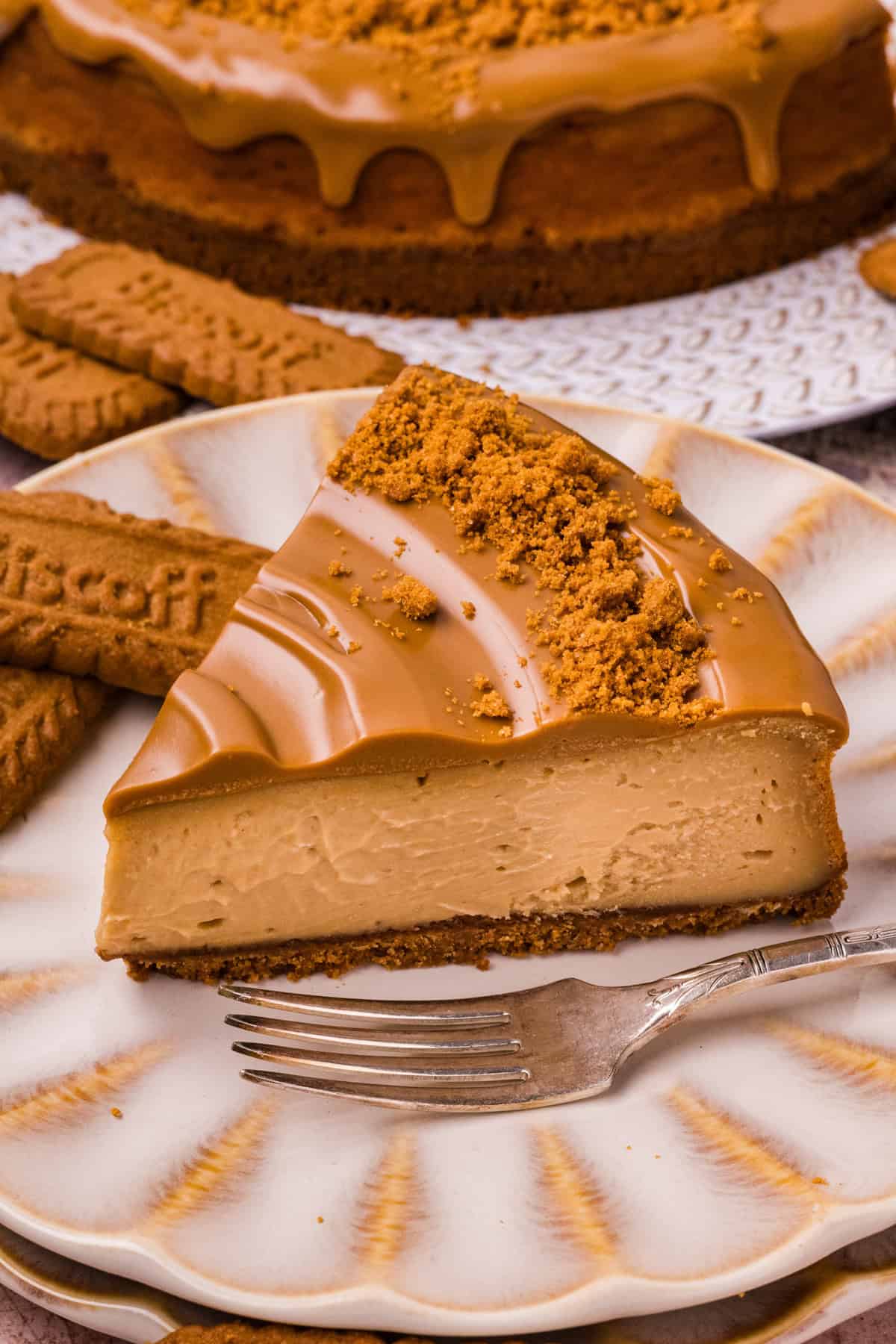
After I made my Biscoff cupcakes, my family begged me to make another Biscoff dessert. So I came up with this Biscoff cheesecake recipe, and it’s been a huge hit.
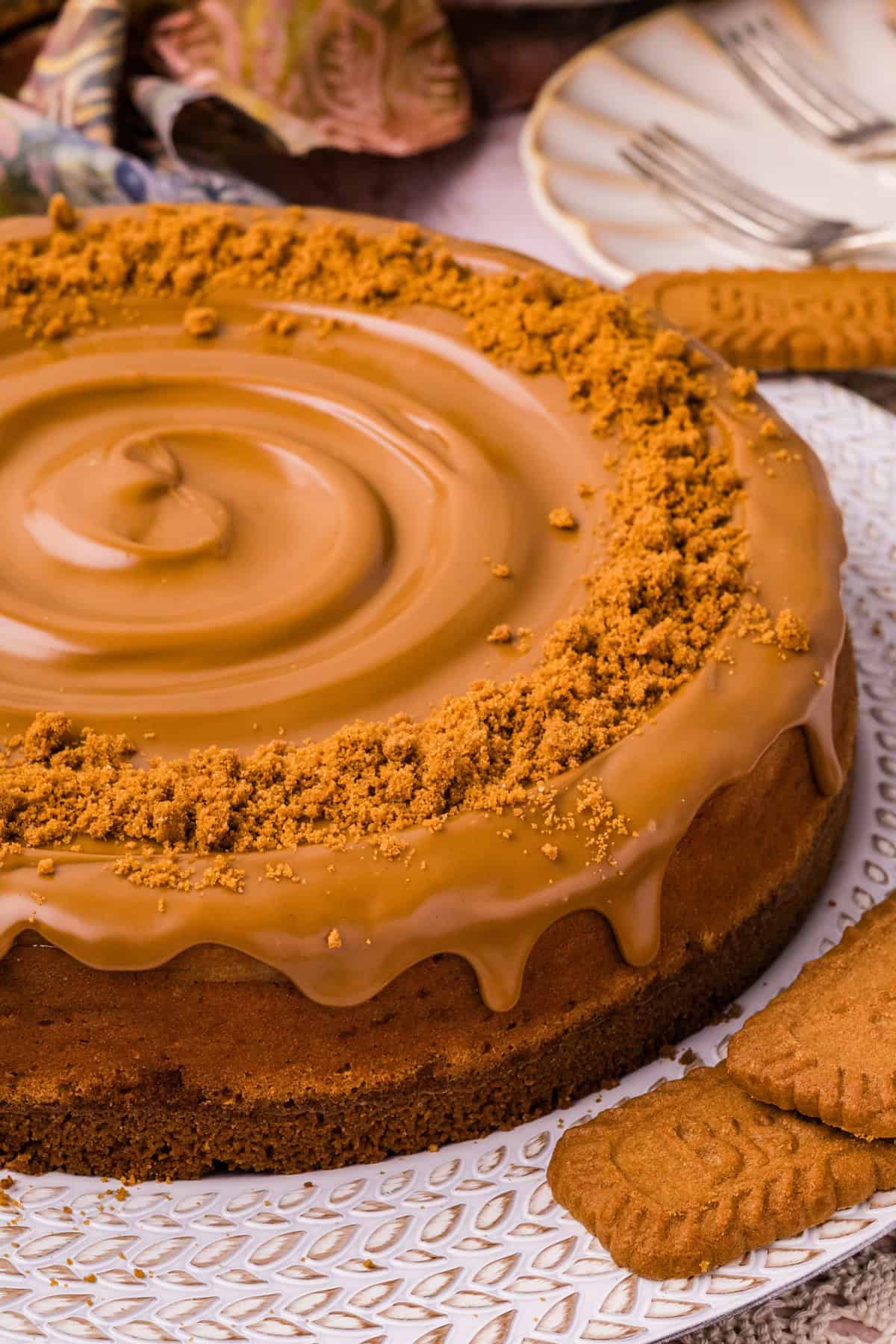
The crust is basically a graham cracker crust made with Biscoff cookies instead of crackers, and the filling has your usual cheesecake ingredients with the addition of a generous amount of Biscoff cookie butter. The cookie butter also works as a topping, as it melts easily in the microwave and can be poured and shaped while warm. It returns to its thickened texture as it cools on top of the cheesecake.
Like my strawberry cheesecake, this one is fantastic for beginners because the cookie butter topping hides any cracks!
Why We Love This Biscoff Cheesecake
- Big Biscoff flavor. With a Biscoff cookie crust, cookie butter in the filling, and cookie butter and crushed cookies on top of the cheesecake, it’s safe to say that there’s no shortage of Biscoff flavor in this recipe. Every bite gives you lots of that sweet spiced flavor!
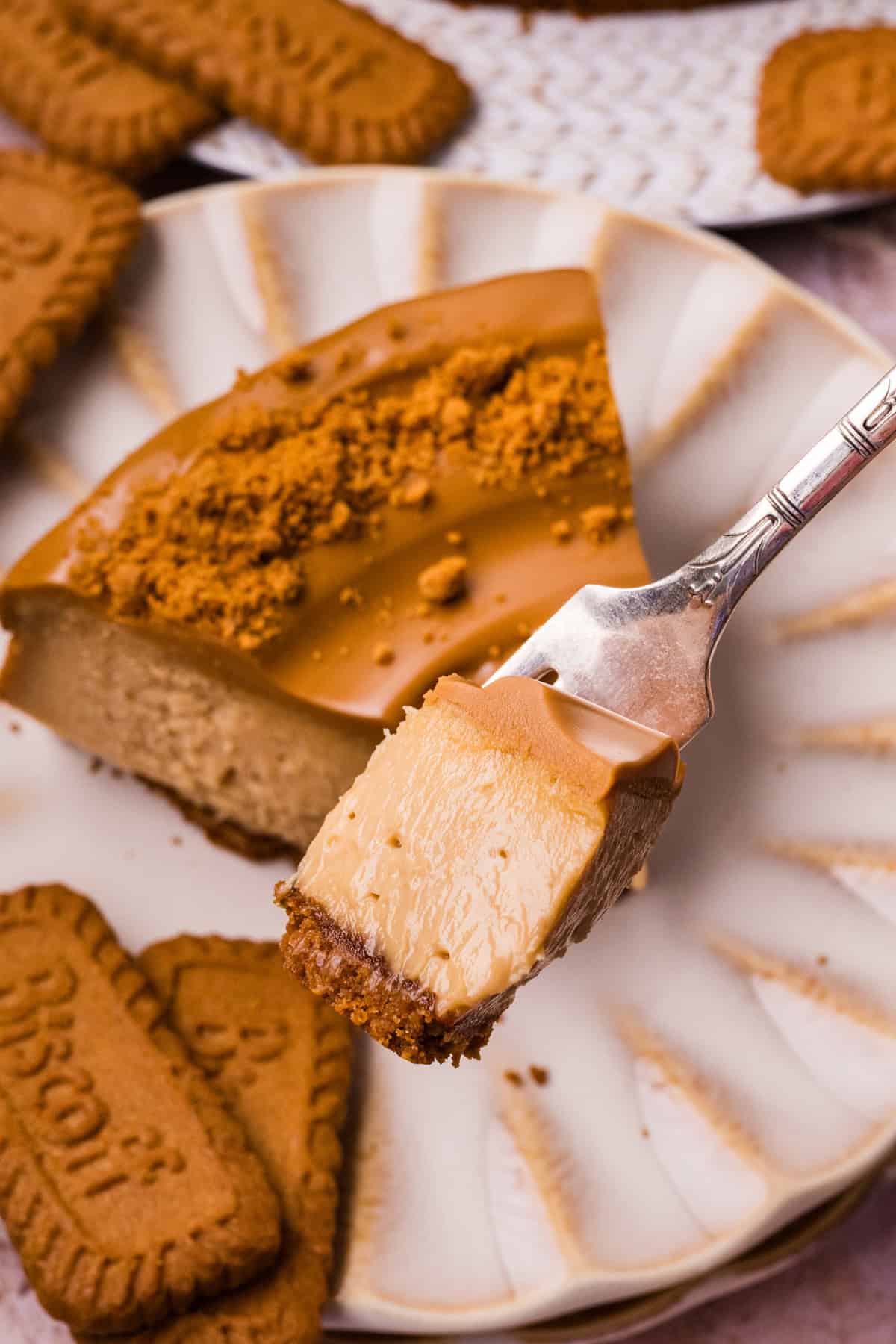
- Smooth, creamy filling. The filling of these Biscoff cheesecake is so smooth and creamy that it’s almost custard-like! The cream cheese and eggs give it structure but the cookie butter and sour cream lighten things up a little. It’s so good!
- Great for making ahead. The cheesecake can be baked and refrigerated up to 48 hours in advance, which makes it great for holidays and parties. I recommend adding the crushed cookies on top within a few hours of serving, just to keep them crunchy, but that step only takes a few minutes.
Ingredient Notes
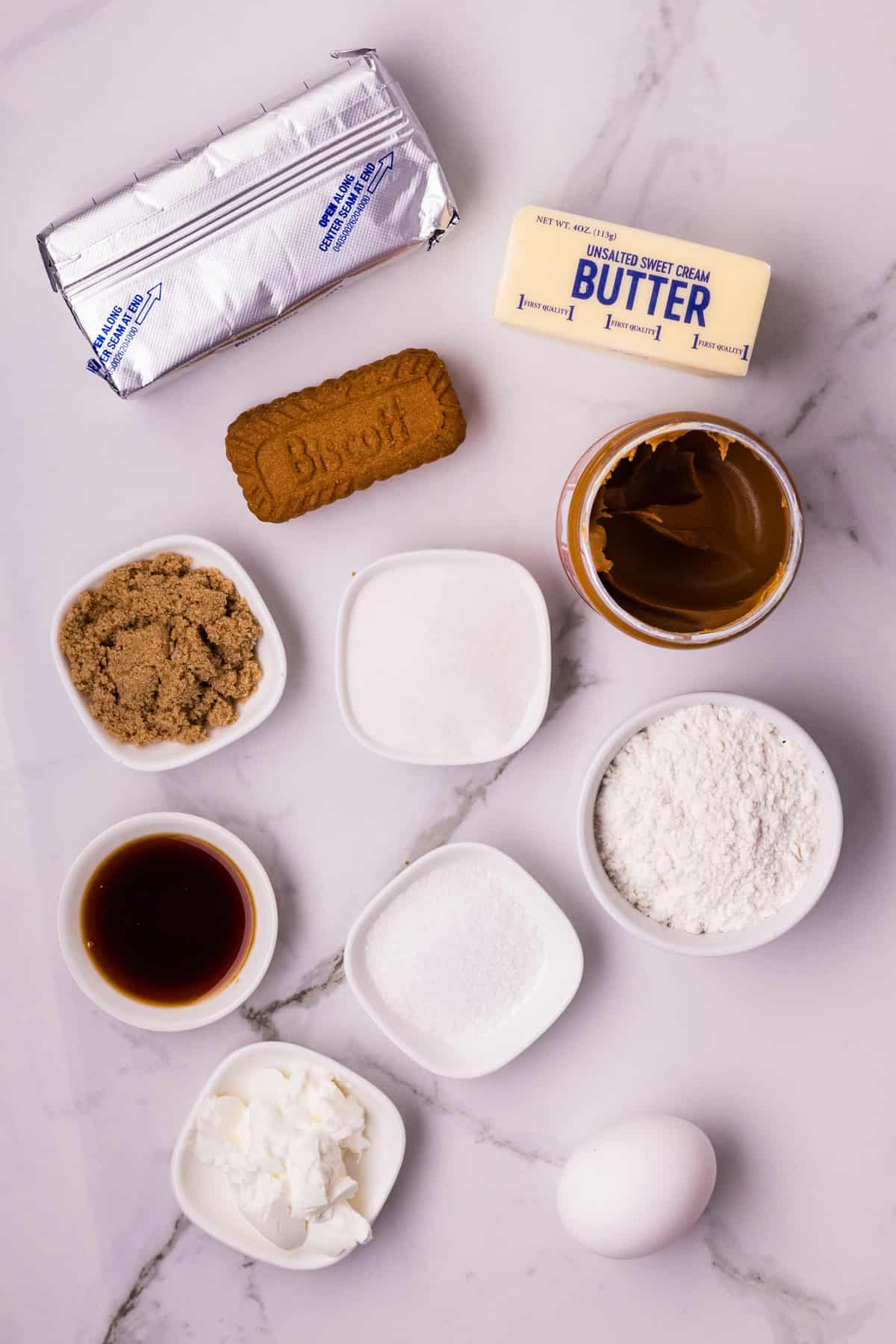
Here’s an overview of everything needed to make this cheesecake and any important notes. Be sure to scroll down to the recipe card below for the exact measurements.
- Biscoff cookies – Crushed cookies are used to make the crust and as a final garnish.
- Biscoff cookie butter – This is available at most stores, usually near the peanut butter. The consistency and texture are similar to peanut butter but it’s made from Biscoff cookies.
- Unsalted butter – Binds the cookie crumbs in the crust.
- Salt – A little bit of salt in the crust and in the cheesecake tempers the sweetness of the added sugars and cookie butter.
- Cream cheese – Since a cheesecake is less likely to crack when mixed as little as possible, room-temperature cream cheese is a must.
- Brown sugar – A little brown sugar in the cheesecake mixture enhances the spiced cookie flavor with a caramelized undertone.
- Granulated sugar – A little bit of granulated sugar helps the cheesecake brown slightly.
- All-purpose flour – Flour helps stabilize the cheesecake and keeps it from cracking while baking.
- Vanilla
- Eggs – Use room temperature eggs so the cheesecake filling mixes easily.
- Sour cream – The sour cream should also be at room temperature. It helps prevent cracks and contributes to a creamy texture in the filling.
How To Make Biscoff Cheesecake
This cheesecake is pretty simple to make; just remember to leave plenty of time for the slow cooling process. The printable measurements can be found in the recipe card below.
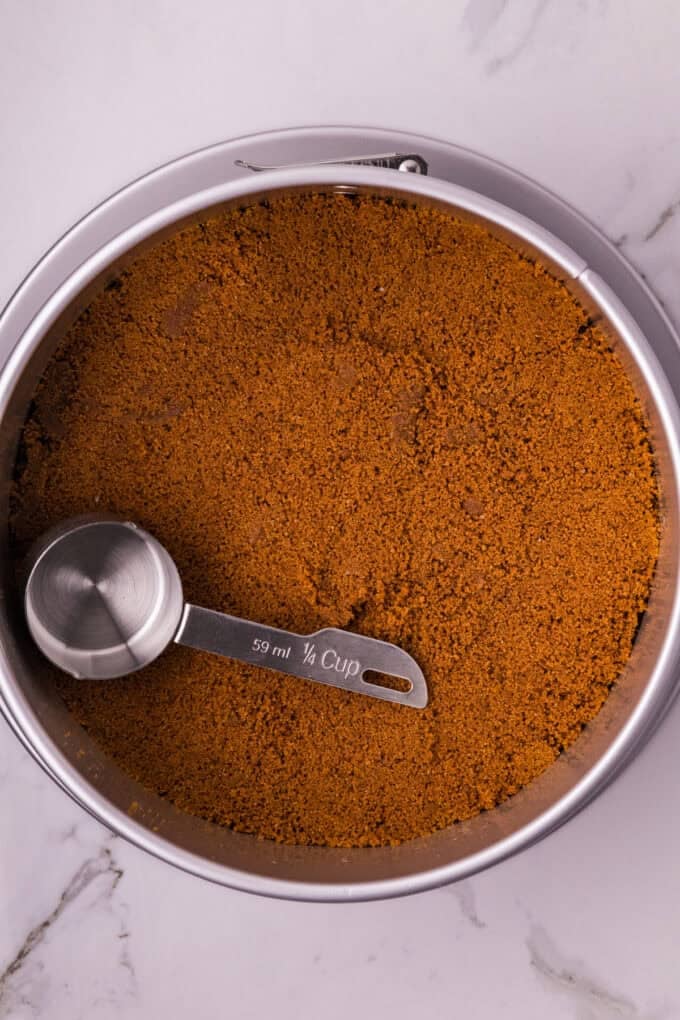
- Prep. Preheat the oven to 350F. Spray a springform pan with non-stick spray, place a parchment circle on the bottom, and spray again.
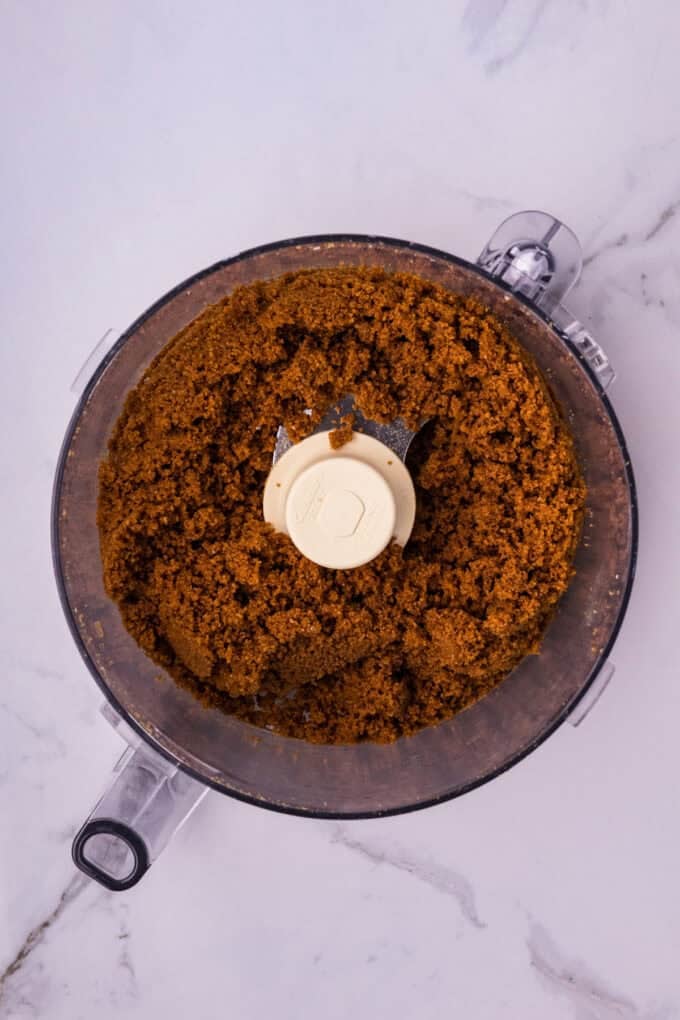
- Make the crust. Process the cookies into a fine crumb. Add the melted butter and salt and pulse until incorporated. Press evenly into the bottom of the pan.
- Bake. Bake the crust for 10 minutes. Allow to cool. Reduce the oven temp to 325F.
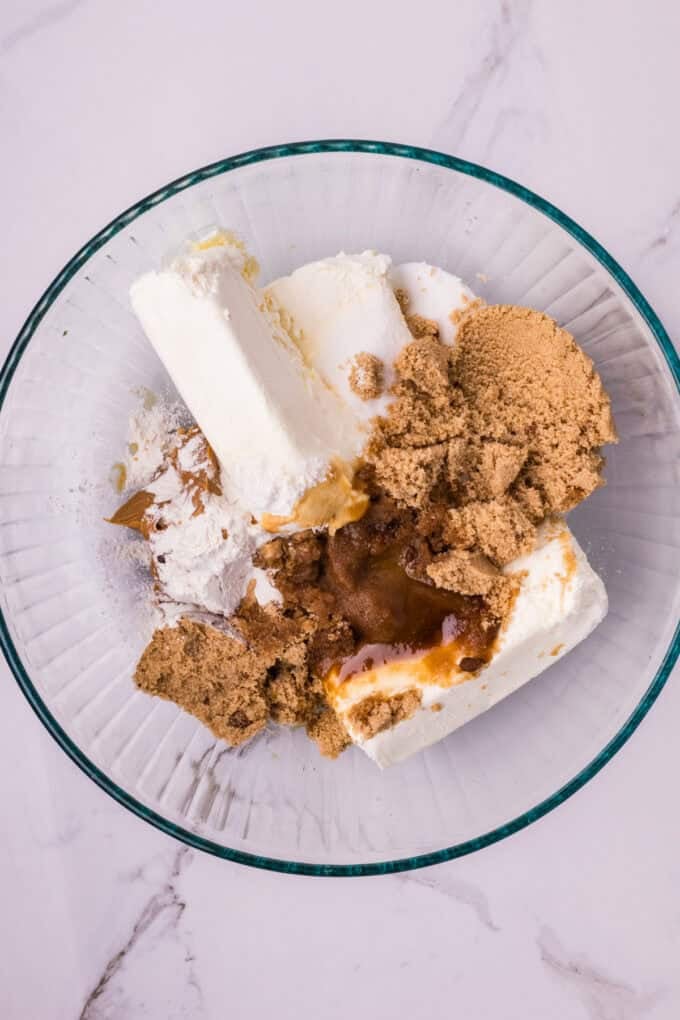
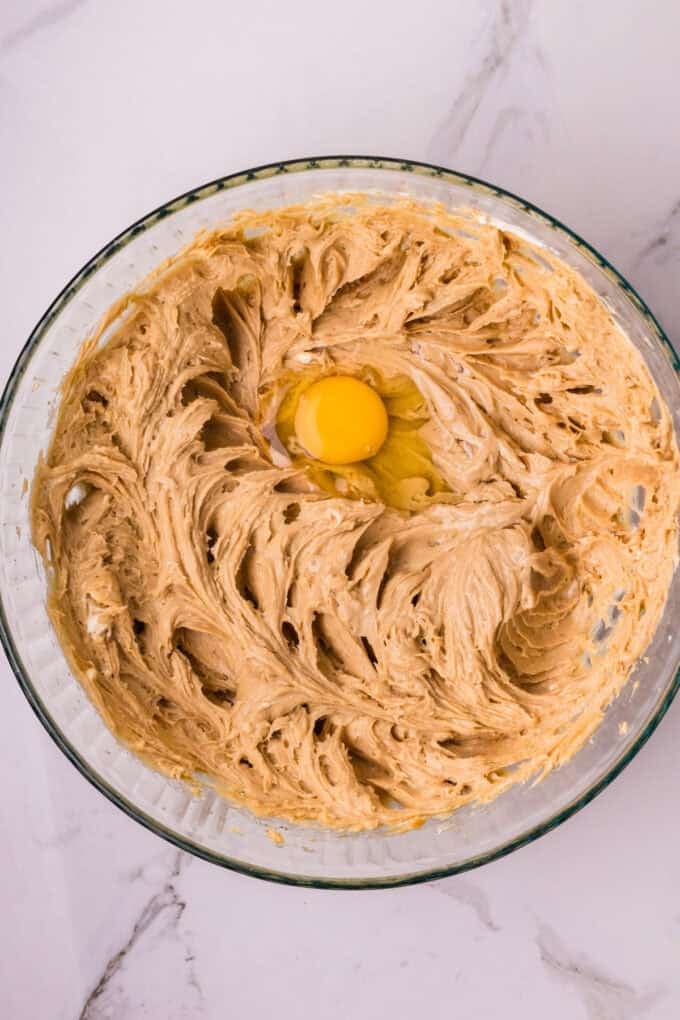
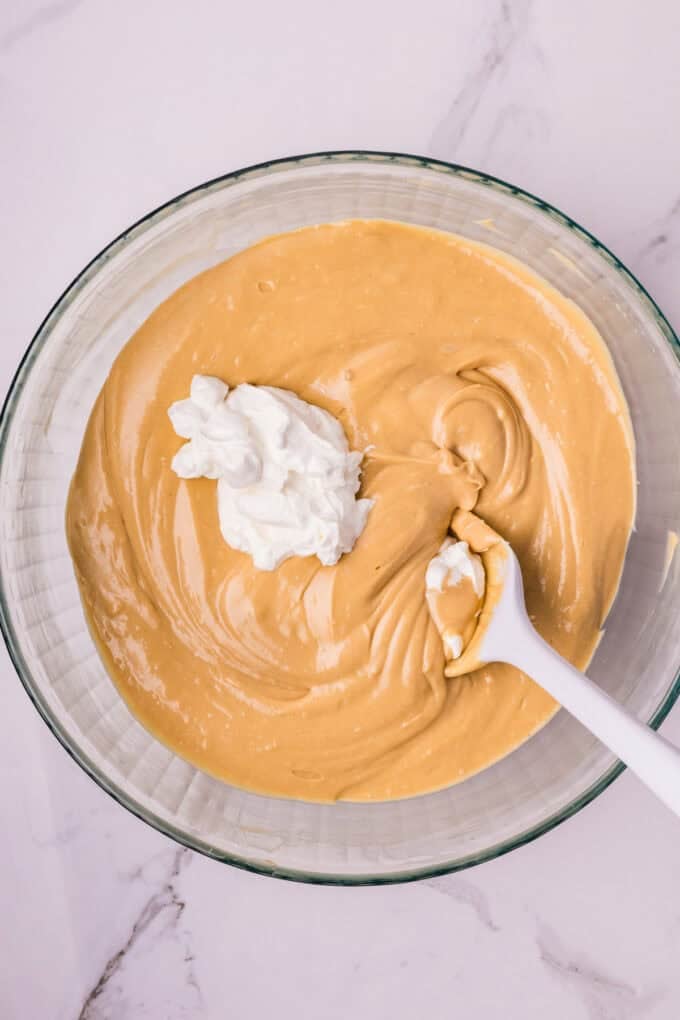
- Make the filling. Mix the cream cheese, cookie butter, sugars, flour, salt, and vanilla on low speed until smooth. Add the eggs one at a time and then fold in the sour cream. Spread evenly on the cooled crust.
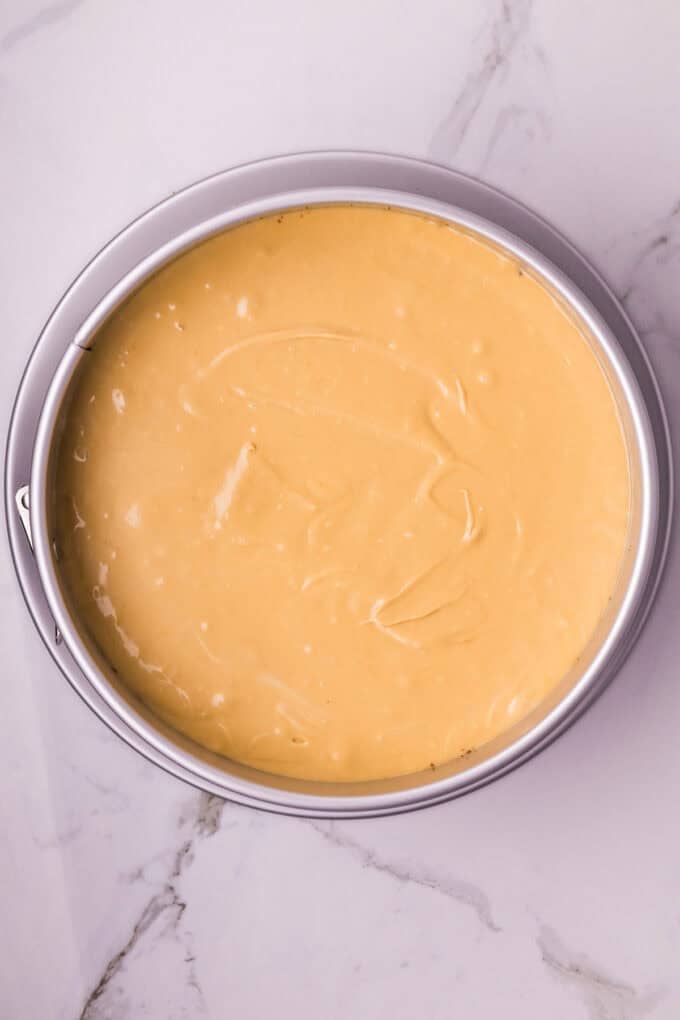
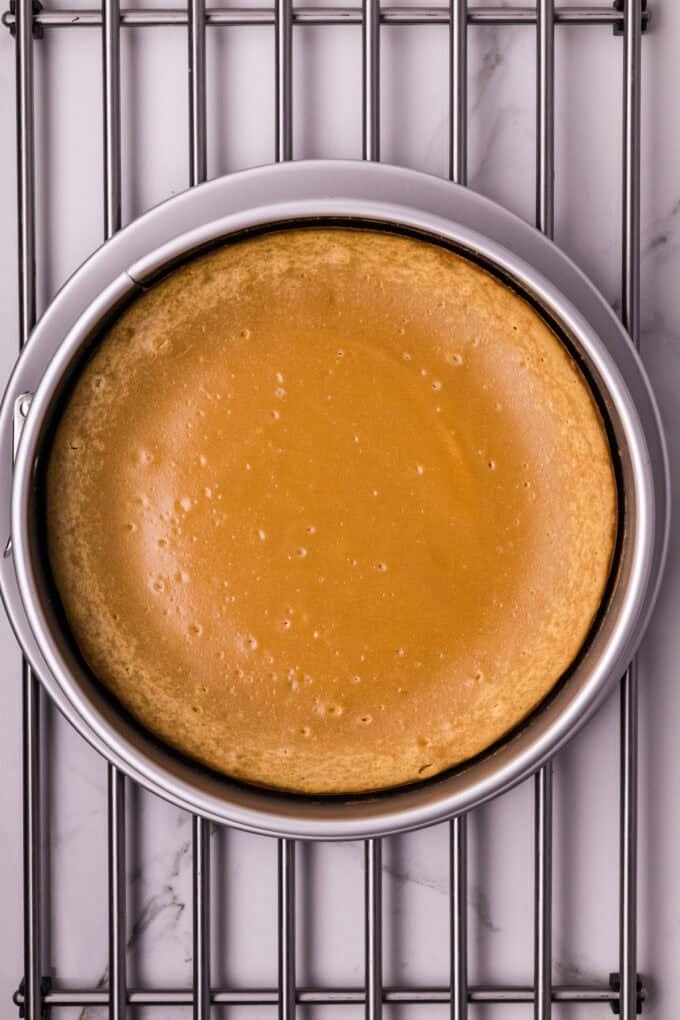
- Bake. Place a baking pan under the rack and fill halfway with hot water. Bake for 30-50 minutes, until the sides are firm but the center still jiggles.
- Cool. Turn the oven off, crack the door, and let the cheesecake cool for 60 minutes. Remove it from the oven and let cool to room temperature before refrigerating for at least 2 hours.
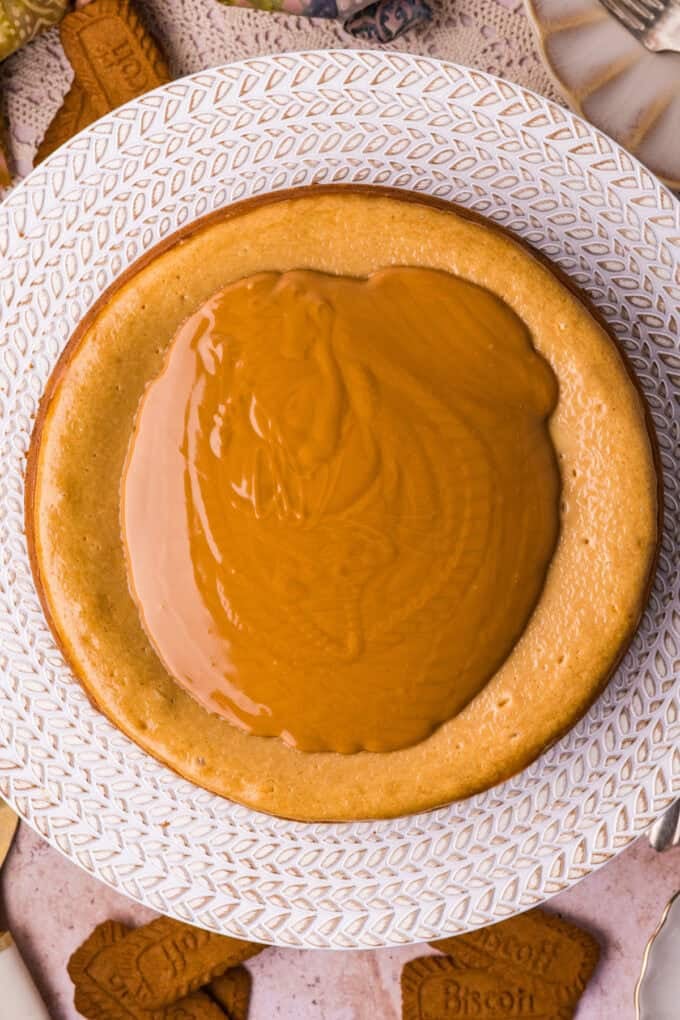
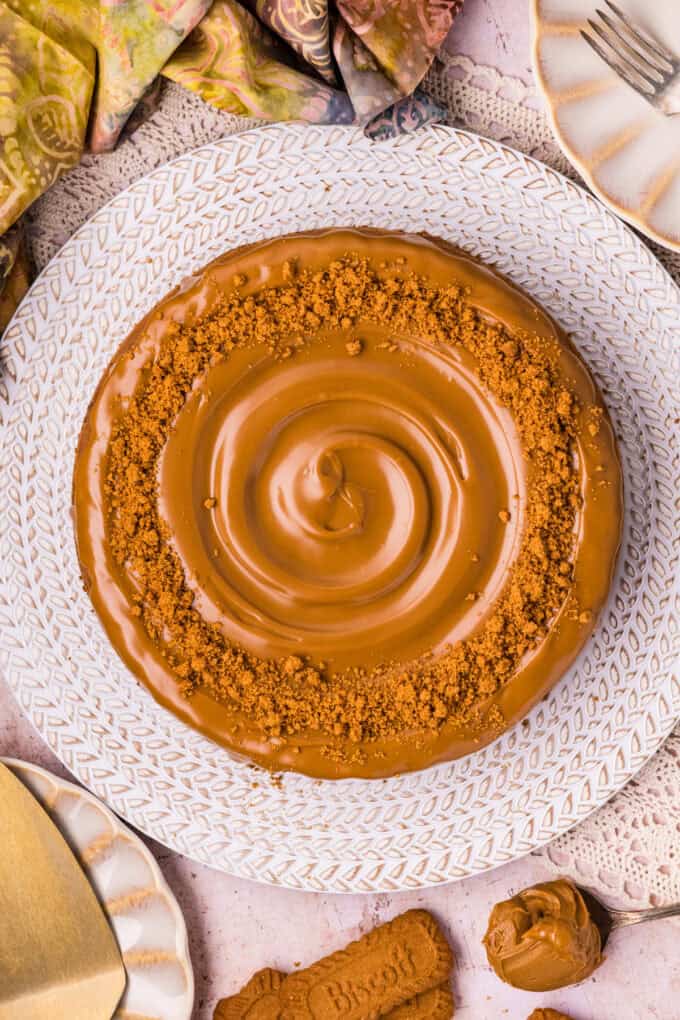
- Add the topping. Melt the remaining cookie butter in the microwave for 15 seconds. Pour evenly over the cheesecake and use a spiral method from the outside toward the center for a smooth finish. Sprinkle crushed cookies along the outside.
- Enjoy. Chill for 30 minutes until the cookie butter is set. Slice and enjoy!
Tips for the Best Cheesecake
Take a second to read through these key points before making this Biscoff cheesecake for the first time.
- Use the right pan. This recipe was created for a 9-inch springform pan. You can use a 10-inch or 8-inch pan, but you’ll need to adjust the baking time. The recipe has not been tested for those size pans. A springform pan is best for baking a cheesecake, since you can release the sides without disturbing the cheesecake. If you use a regular cake pan, place parchment paper on the sides and bottom to allow the cheesecake to be lifted out. Because the cheesecake is fairly fragile and heavy, it will likely crack when you remove it from the pan.
- Easy removal from the pan. Parchment paper helps you remove the cheesecake from the base of the springform pan. If you don’t have parchment paper, spray the bottom of the springform pan well with non-stick spray.
- Use room temperature ingredients. The cream cheese, sour cream, and eggs should at be at room temperature when starting this Biscoff cheesecake recipe. It helps ensure a smooth, creamy filling without overmixing.
- Mix on low. When combining the ingredients, mix on low to prevent too much air from being added to the filling, which can cause cracks.
- Cool slowly. Letting the cheesecake slowly cool in the warm oven ensures that the center is fully set and helps prevent cracks.
- Don’t skip the water. Instead of a traditional water bath, I just add a pan of water underneath the rack. It’s easier than a water bath but still creates moisture in the oven that helps the cheesecake cook evenly.
Proper Storage
- Fridge: Store the Biscoff cheesecake in the refrigerator for up to 3 days. Cover it loosely to keep it from drying out.
- Freezer: This cheesecake also freezes well. Freeze the entire cheesecake in a well sealed container. Freeze it for up to 6 months. Thaw it in the refrigerator. Freeze individual slices of cheesecake, with parchment or wax paper between slices, in a sealed container. Thaw individual slices in the refrigerator for 30 minutes to 1 hour, or at room temperature for 10 minutes.
 Add as Google Trusted Source
Biscoff Cheesecake
Ingredients
Biscoff Cookie Crust:
- 32 Biscoff cookies
- 1/3 cup unsalted butter, melted
- Pinch of kosher salt
Biscoff Cheesecake Batter:
- 16 ounces cream cheese, room temperature
- 1 cup Biscoff cookie butter, creamy
- ¾ cup brown sugar
- ¼ cup granulated sugar
- 3 Tablespoons all-purpose flour
- ½ teaspoon kosher salt
- 2 teaspoons vanilla
- 4 eggs, room temperature
- ½ cup sour cream, room temperature
Melted Cookie Butter:
- 8 ounces Biscoff cookie butter, creamy
Garnish:
- 4 to 6 Biscoff cookies, crushed
Instructions
Biscoff Crust:
- Preheat the oven to 350°F. Lightly spray a 9-inch springform pan with non-stick cooking spray, use a 9-inch parchment circle, and spray again. Set it aside.
- Process the Biscoff cookies into a fine crumb. Add the melted butter and a pinch of salt. Continue to pulse the food processor until the mixture is fully incorporated.
- Add the crust mixture and press it evenly into the pan without pushing it up the sides. Use a flat surface to press the crumbs evenly.
- Bake the crust at 350°F for 10 minutes. Allow to cool. Reduce the temperature to 325°F.
Biscoff Cheesecake Batter:
- Add cream cheese, cookie butter, both sugars, flour, salt, and vanilla to a large mixing bowl. Using a hand mixer on low speed, mix until smooth and well blended.
- Add the eggs individually, scraping the bowl between each addition. Fold in the sour cream. Top the crust with the batter. Smooth the batter before baking.
- Place a baking pan under the rack where the cheesecake will bake. Fill the pan halfway with hot water. Bake at 325°F for 30 to 35 minutes, or until the sides are firm but the center is still jiggly. Turn off the oven, leave the door slightly ajar, and let the cheesecake cool slowly in the warm environment for 60 minutes. Remove the cheesecake and let it cool at room temperature before chilling. Chill the cheesecake for at least 2 hours (but up to 48 hours) in the refrigerator before removing it from the springform pan and topping it with melted cookie butter.
Melted Cookie Butter:
- In a microwave-safe bowl, heat the cookie butter for 15 seconds. Stir and microwave in 5-second intervals as needed until the mixture is smooth.
- Pour the cookie butter evenly over the cheesecake, spreading it to the edge as desired, using a spiral method to smooth the final look—working from the outside in toward the center. Sprinkle crushed cookies along the outside border. Chill in the refrigerator until the cookie butter is set, for at least 30 minutes, before cutting and serving the cheesecake.
Notes
Nutrition
Nutrition information is automatically calculated, so should only be used as an approximation.
Like this? Leave a comment below!
Leave a comment & rating below, or tag @kitchenfunwithmy3sons on social media!