


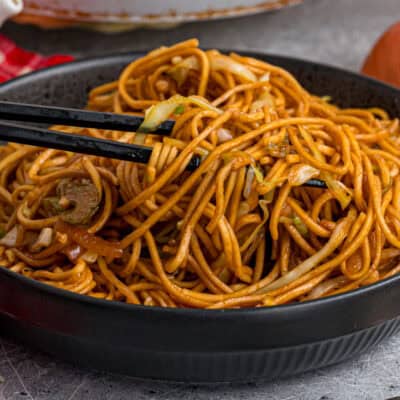
This Copycat Panda Express Chow Mein recipe tastes just like the popular takeout dish…but better. A rich, savory umami sauce coats the tender noodles while stir-fried cabbage and onions add crunch, texture, and flavor. The best part? It’s ready in just 30 minutes!
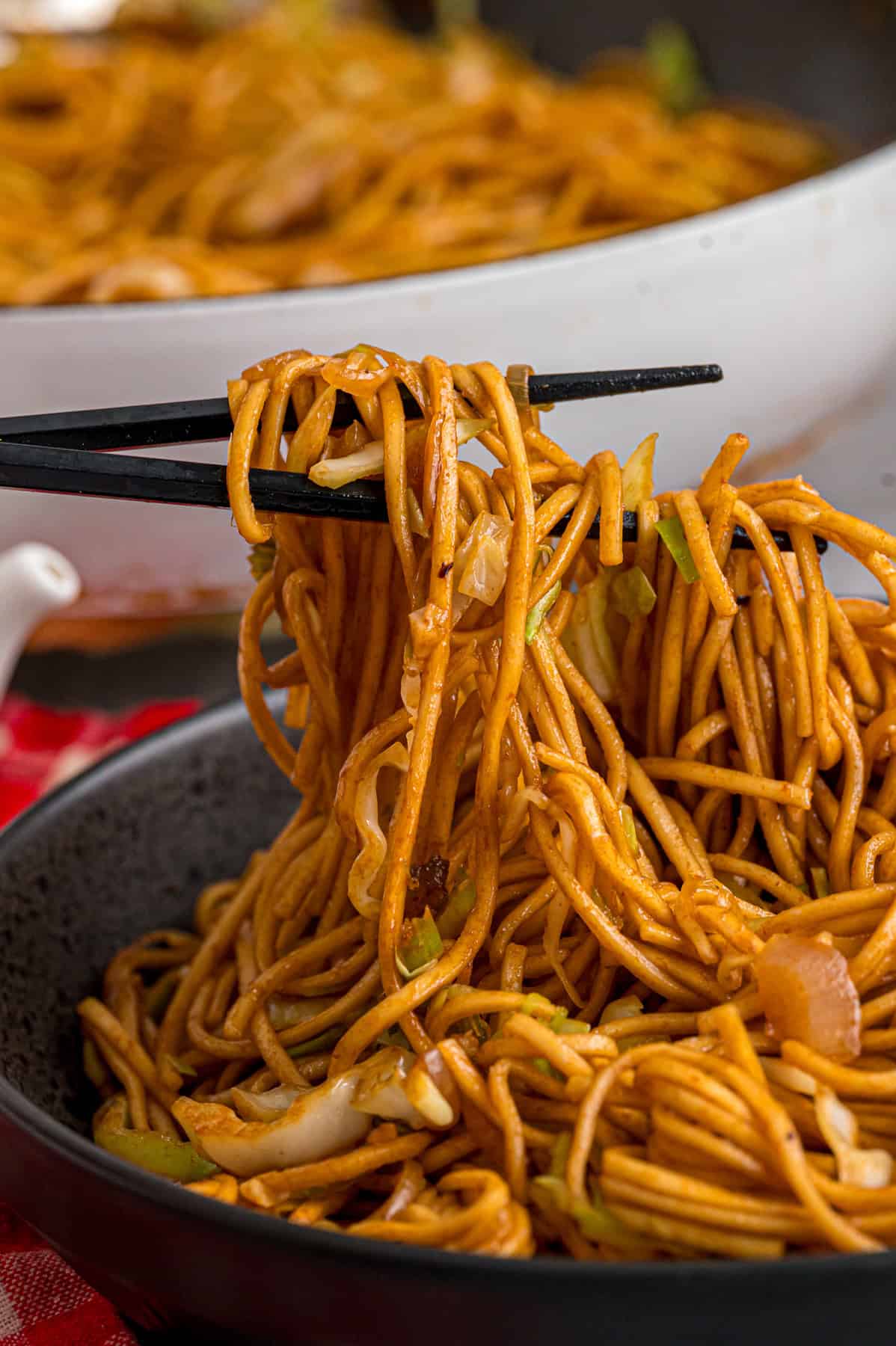
We love Panda Express, but what I love even more is recreating our favorite dishes at home. They’re cheaper, they taste better, and I know exactly what’s in them. This Panda Express chow mein recipe is the latest addition to my recipe box, following Panda Express cream cheese rangoon and Panda Express orange chicken.
My family loves this copycat Panda Express chow mein even more than the restaurant version. It’s a bit saucier and never ends up dried out, and the flavor is almost identical but better. The cabbage and other veggies are always guaranteed to be crunchy, too. It’s become a highly requested dish, and I never mind because it takes less than 30 minutes to get on the table.
Why We Love This Copycat Panda Express Chow Mein
- Better than takeout. I may be a bit biased, but I think this chow mein tastes even better than the takeout version. Plus, there’s no risk of it being dried out from sitting on the buffet for hours.
- Ready in 25 minutes. From start to finish, it takes less than 25 minutes to make this Panda Express chow mein recipe. I love that it’s quick and easy enough to whip up as an entree on a busy weeknight or as a side dish if I’m preparing other takeout-inspired recipes.
- Easy-to-find ingredients. The ingredients list for this recipe is pretty basic. The most “unusual” ingredients are dark soy sauce and oyster sauce, both of which are readily available at almost all grocery stores in the Asian aisle. (And you can totally use all regular soy sauce, if you don’t want to buy dark soy sauce just for this recipe.)
Ingredient Notes
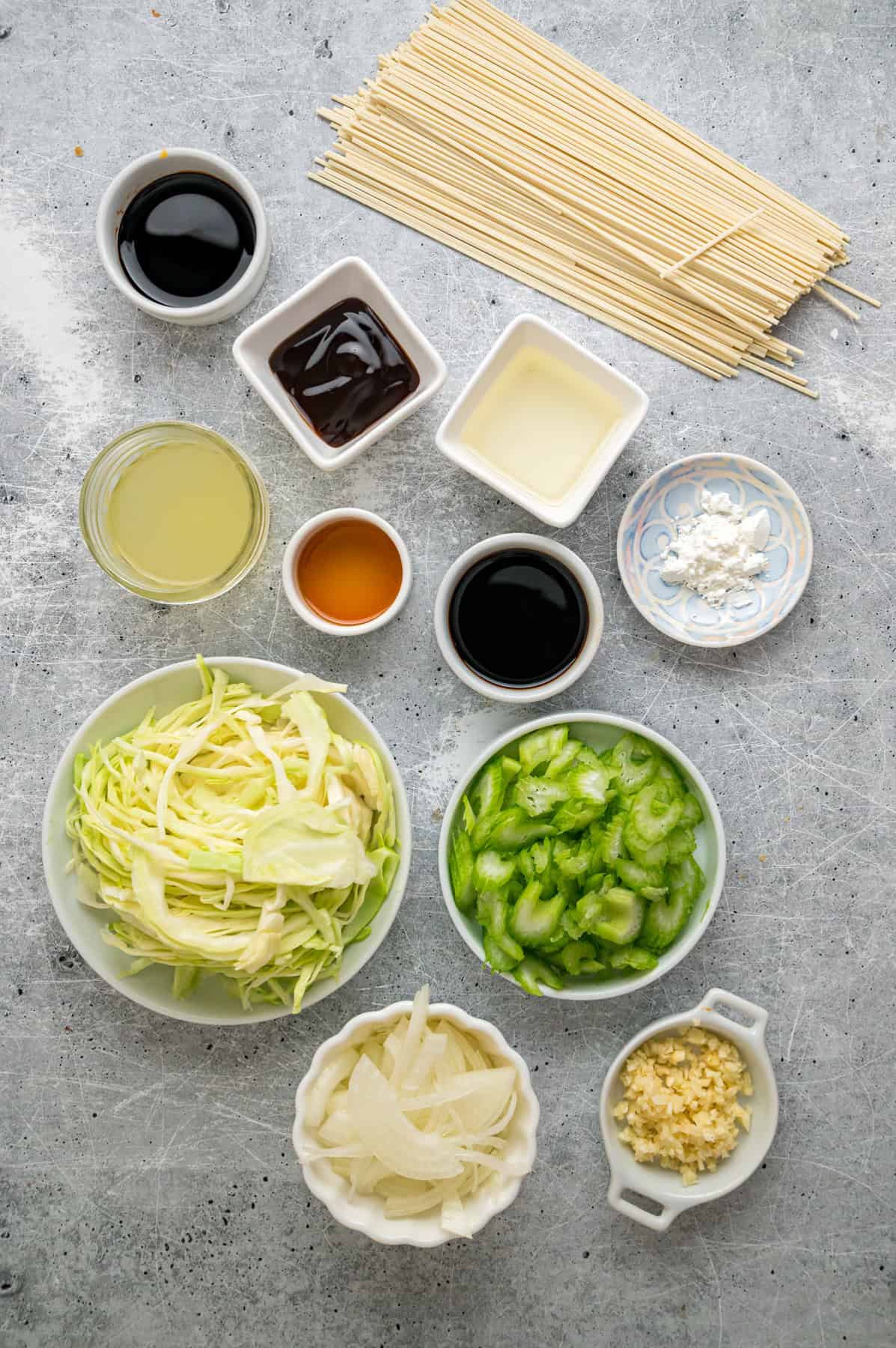
All of the ingredients for this Panda Express copycat recipe are easy to find in most grocery stores. Be sure to scroll down to the recipe card at the end for the exact measurements.
- Chow mein noodles – You can choose between refrigerated or dry noodles. Both work for this recipe.
- Chicken stock – For a vegetarian option, use veggie broth instead.
- Soy sauce – I use both regular soy sauce and dark soy sauce for a more robust flavor and darker sauce. If you don’t have dark soy sauce, just use more regular soy sauce, though the noodles will look lighter.
- Oyster sauce – Adds a salty, slightly sweet umami flavor.
- Cornstarch – Thickens the sauce.
- Vegetable oil – Or another neutral oil.
- Aromatics – Minced garlic and thinly sliced onion.
- Celery – Add some crunch and texture to the dish.
- Green cabbage – Thinly sliced to add texture and substance to the dish.
- Sesame oil – For a lightly nutty finish.
How To Make Panda Express Chow Mein
Making this at home is faster than leaving the house to pick up takeout. The printable instructions can be found in the recipe card at the end of the post.
- Cook the noodles. Prepare the noodles according to the package instructions. Drain and set aside.
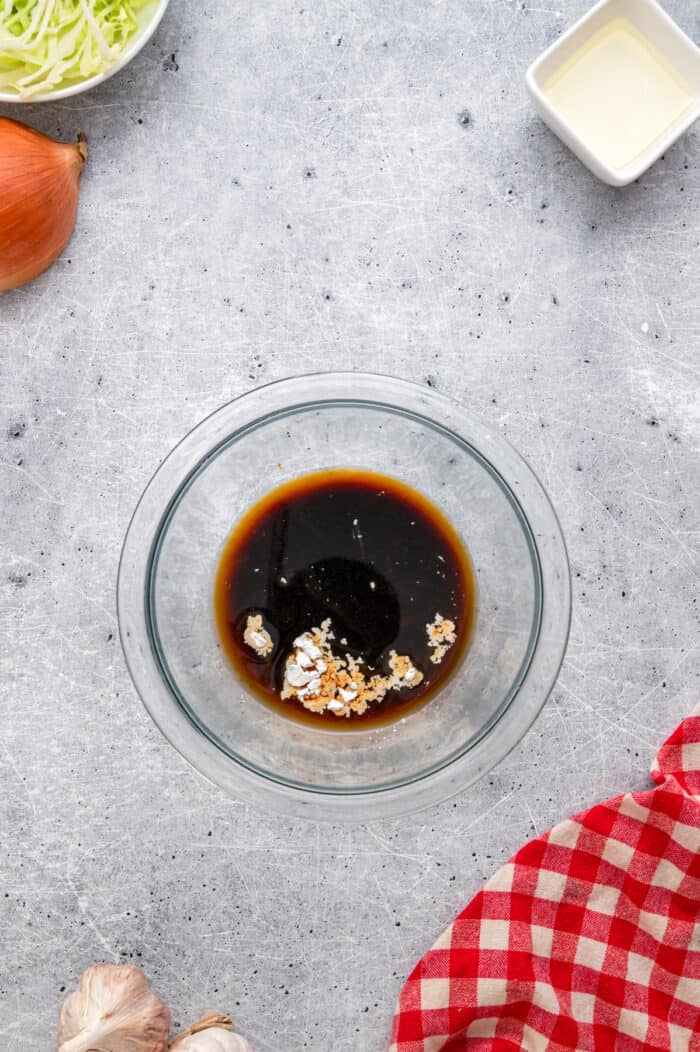
- Prepare the sauce. Whisk together the chicken stock, soy sauce, oyster sauce, and cornstarch. Make sure the cornstarch fully dissolves.
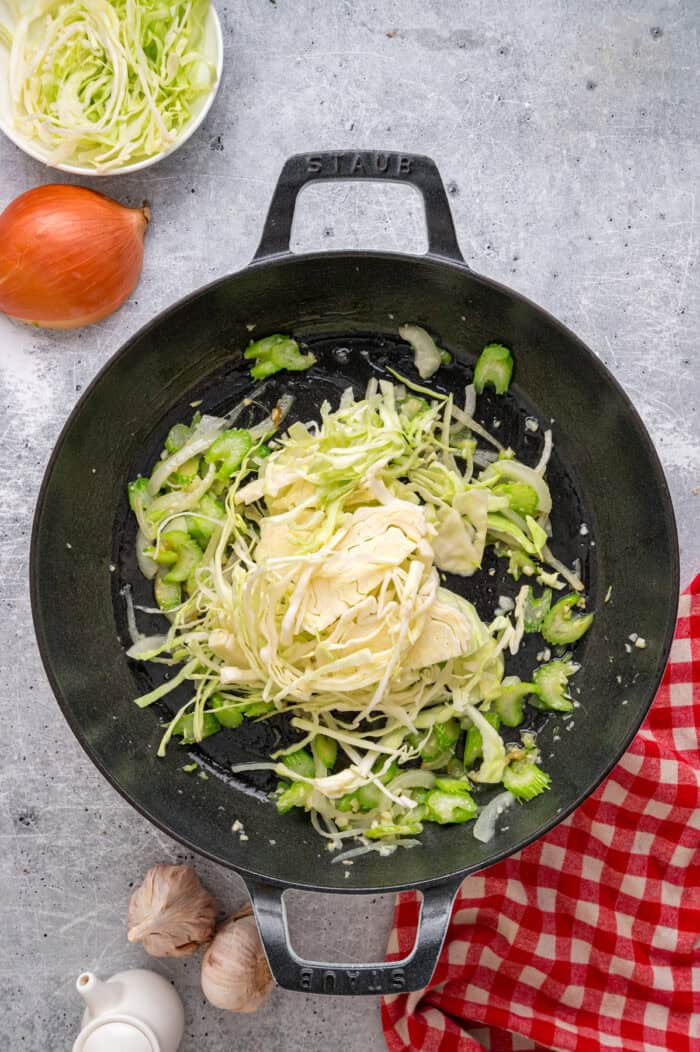
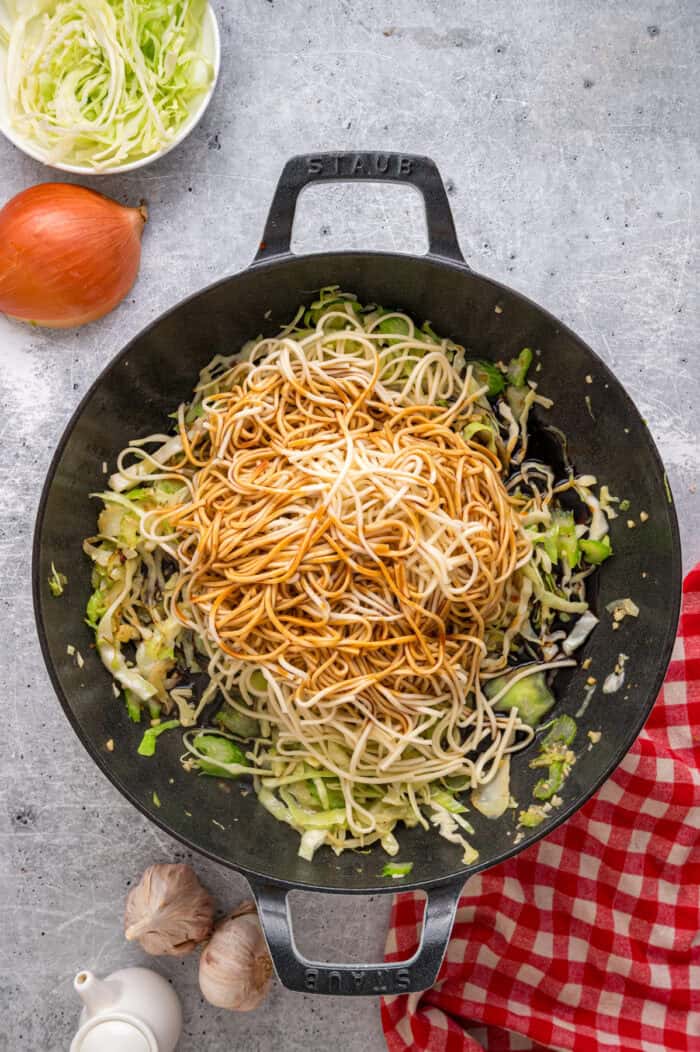
- Saute the veggies. Heat the oil over high heat until it starts to shimmer. Stir-fry the garlic, onions, and celery for about 2 minutes. They should start to soften but still have a crunch. Toss in the cabbage and cook for another 1-2 minutes, until slightly wilted.
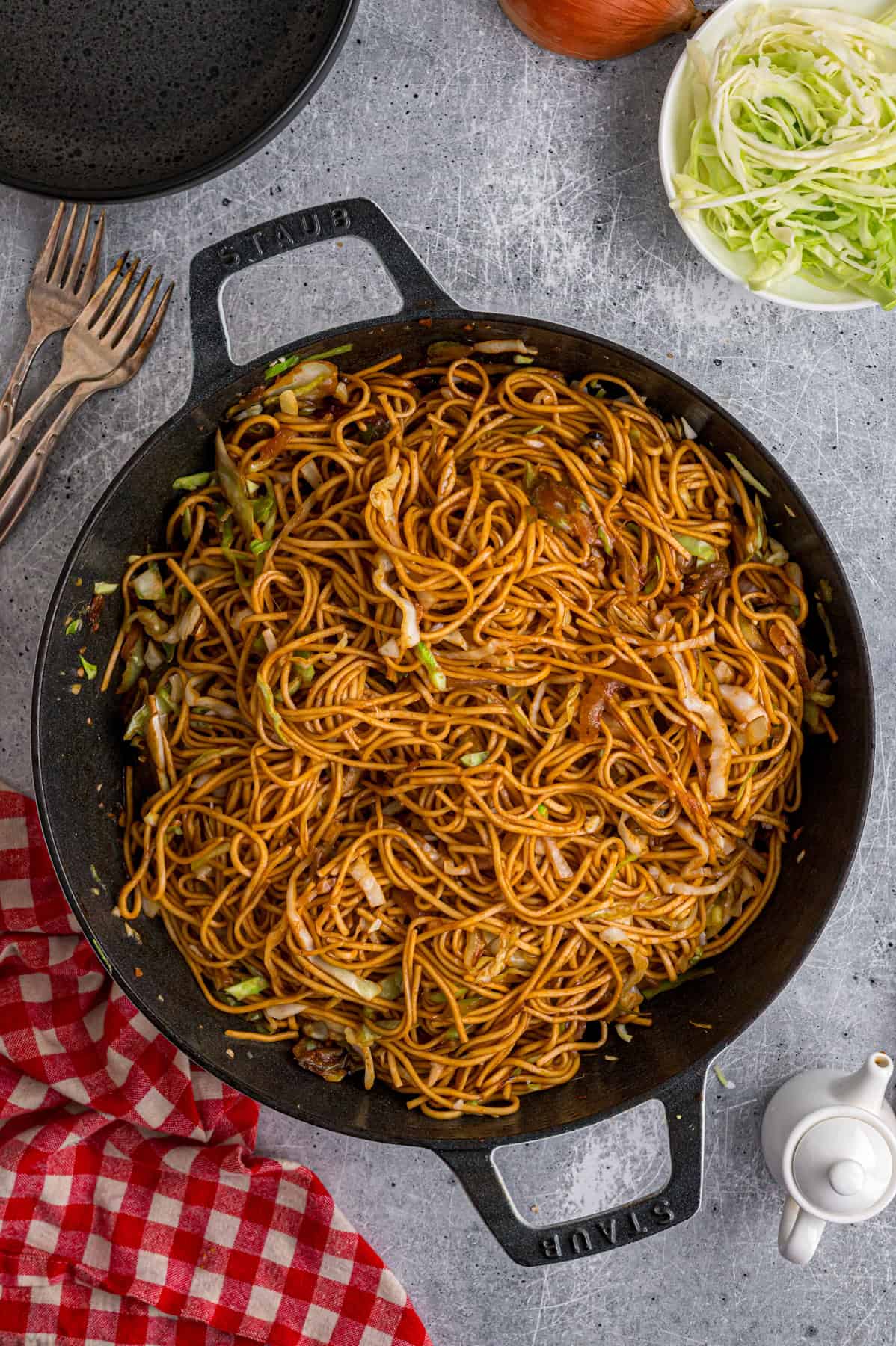
- Combine. Add the noodles to the skillet and pour the sauce on top. Toss with tongs or a spatula to combine. Cook for 2-3 minutes, letting the noodles sear slightly and the sauce thicken.
- Enjoy. Remove from heat, add the sesame oil, toss to combine, and enjoy.
Recipe Tips & Variations
Here are a few general tips for making Panda Express chow mein at home, as well as some ways to customize it.
- Other noodle options. If you can’t find refrigerated or dried chow mein noodles, dry yakisoba noodles or thin spaghetti work as a backup, though the texture will be slightly different.
- Slice the veggies evenly. Slice the celery and onions very thin so they cook at the same rate as the cabbage.
- Add more veggies. You can add shredded carrots or bean sprouts during the last minute of cooking for more crunch.
- Try it with protein. You can add sliced chicken, shrimp, tofu before starting the vegetables.
- Make it vegetarian. For a vegetarian version, swap the chicken stock for vegetable stock and use mushroom sauce instead of oyster sauce.
What To Serve It With
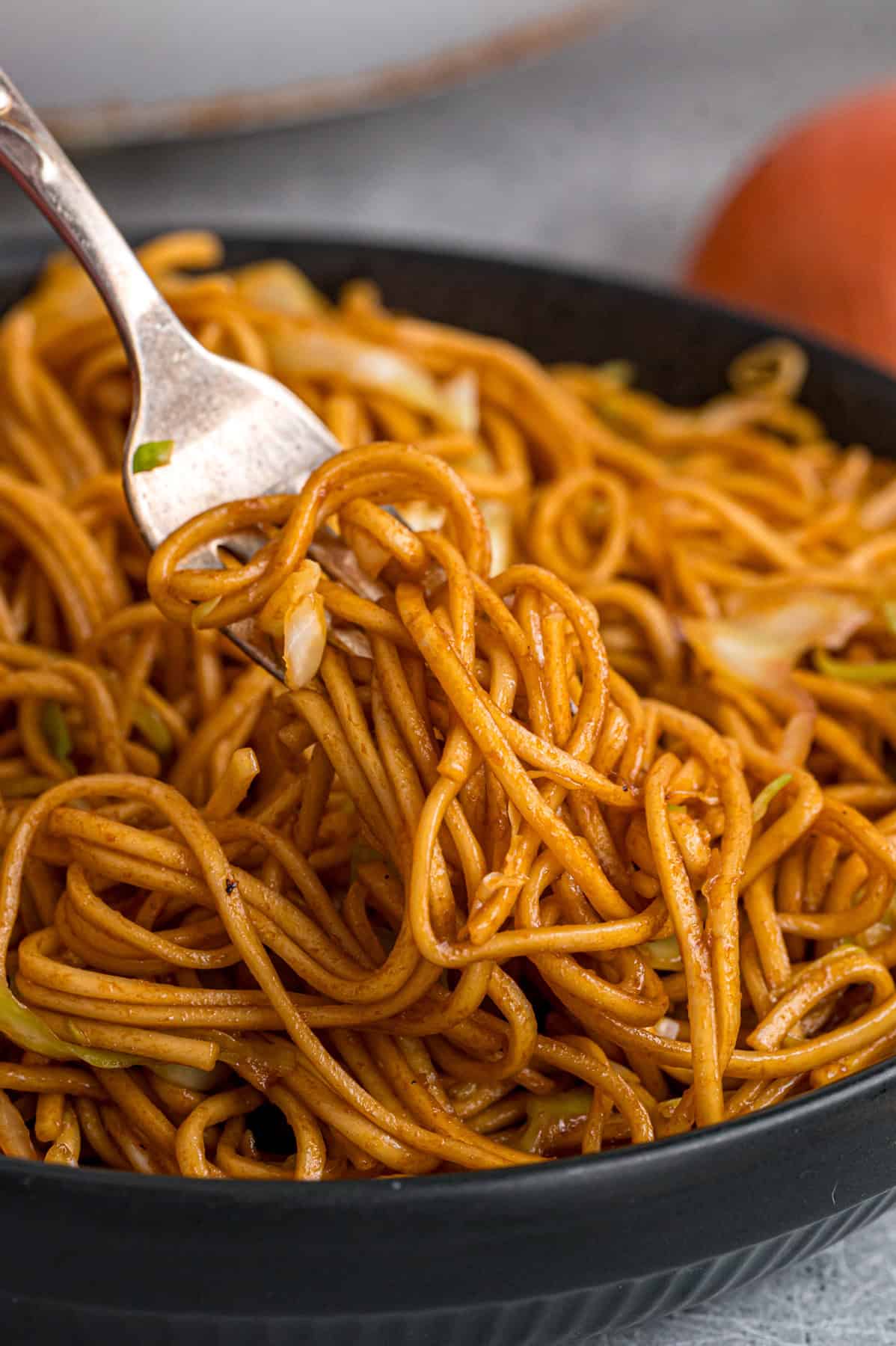
This Panda Express chow mein can definitely be enjoyed as a meal itself, especially if you add some chicken or shrimp like our chicken low mein recipe. But we typically enjoy it as a side dish for our other favorite Chinese takeout recipes, like cashew chicken, Hunan chicken, or kung pao chicken.
A side of cream cheese rangoon or egg rolls is never a bad idea. Sometimes I’ll combine the two and make crab rangoon egg rolls.
How To Store & Reheat Leftovers
- Fridge: Store leftover Panda Express chow mein in an airtight container in the fridge for up to 4 days.
- Reheat: To reheat, microwave with a splash of water to keep the noodles from drying out, or toss them back in a pan over medium heat.
Panda Express Chow Mein
Ingredients
- 1 pound chow mein noodles
- 1/4 cup chicken stock
- 2 Tablespoons regular soy sauce
- 1 Tablespoon dark soy sauce
- 1 Tablespoon oyster sauce
- 1/2 teaspoon cornstarch
- 2 Tablespoons vegetable oil or neutral oil
- 3 cloves garlic minced
- 1/2 onion thinly sliced
- 2 stalks celery sliced on a bias
- 2 cups green cabbage thinly sliced
- 1 teaspoon sesame oil
Instructions
- Bring a large pot of water to a boil and prepare the noodles according to the package directions, then drain and set them aside.
- In a small bowl, whisk together the chicken stock, regular soy sauce, dark soy sauce, oyster sauce, and cornstarch until the starch is fully dissolved.
- Heat the vegetable oil in a heavy skillet or wok over high heat until it just starts to shimmer.
- Add the minced garlic, sliced onions, and celery to the pan and stir-fry for about 2 minutes until the vegetables begin to soften but still have a crunch.
- Toss in the sliced cabbage and continue to cook for another 1-2 minutes until the cabbage is slightly wilted.
- Add the cooked noodles to the skillet or wok and pour the sauce mixture over the top, tossing everything constantly with tongs or a spatula.
- Cook for another 2-3 minutes over high heat to allow the noodles to sear slightly and the sauce to thicken and coat everything evenly.
- Turn off the heat, drizzle the sesame oil over the noodles, give it one final toss, and serve immediately. Enjoy!
Last Step:
Please leave a rating and comment letting us know how you liked this recipe! This helps our business to thrive and continue providing free, high-quality recipes for you.Video
Notes
Nutrition




Leave a Review!
We LOVE hearing from you! Submit your question or comment here.
Your email address will not be published.
1 thought on “Panda Express Chow Mein (Copycat Recipe)”
We loved this! Added some chicken. Really good.