This post may contain affiliate links. Please read our disclosure policy.

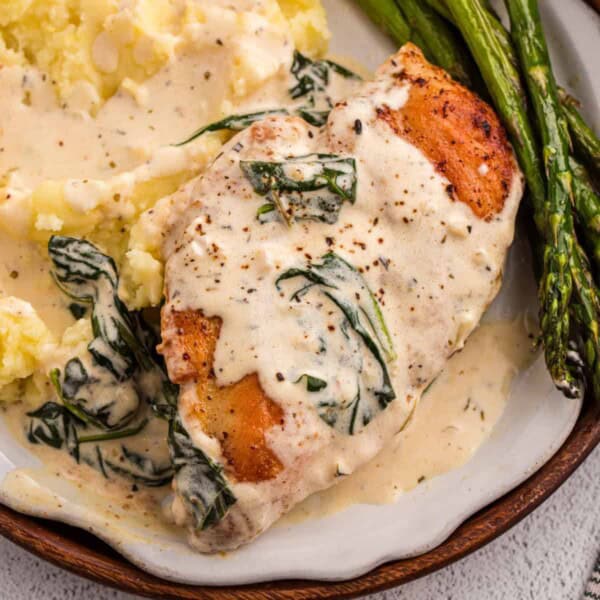
Juicy pan-fried chicken is coated in a creamy, garlicky white wine sauce with spinach and freshly grated parmesan in this Chicken Florentine recipe. Ready in just 35 minutes, it’s easy enough for weeknights yet elegant enough for special occasions.
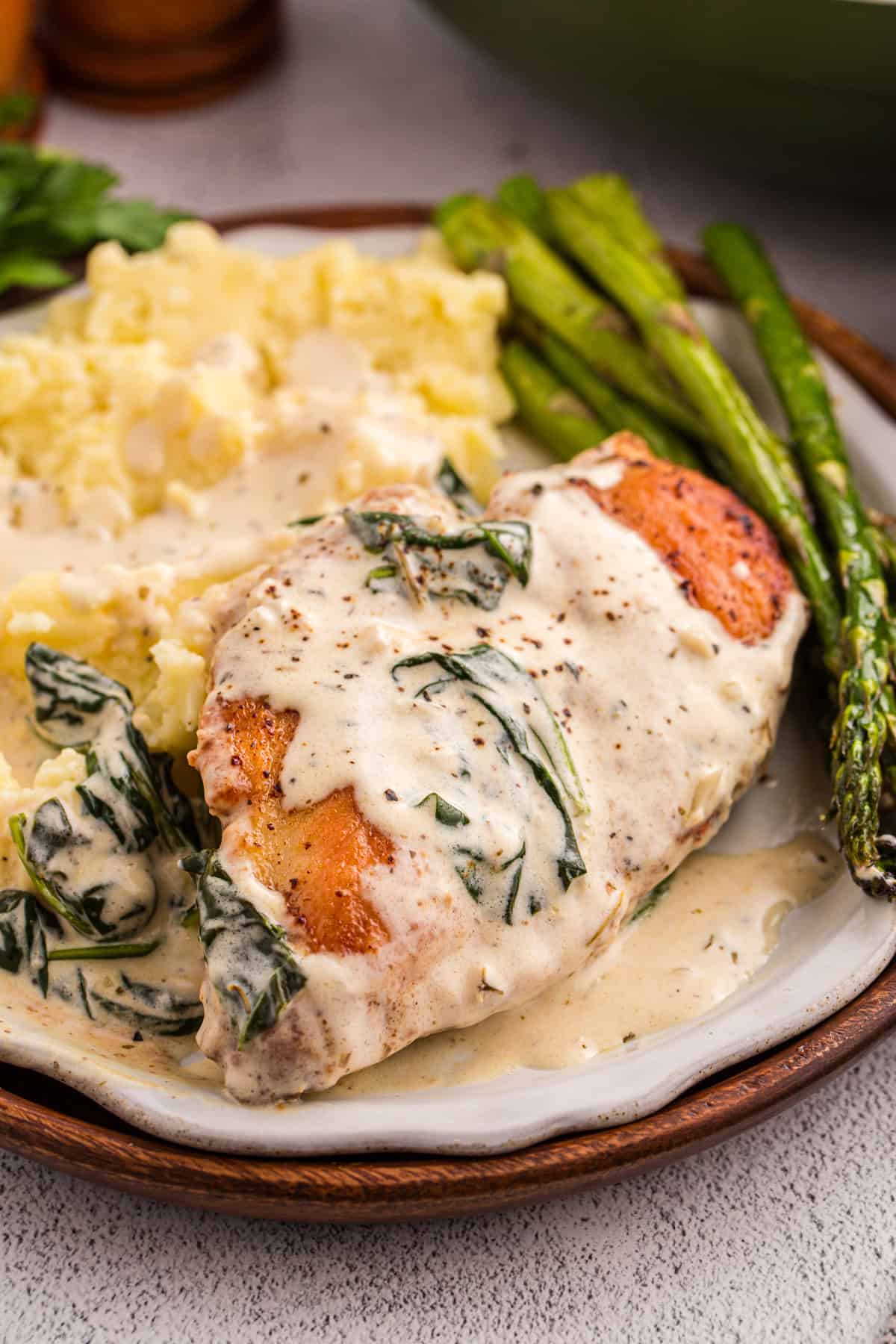
This chicken Florentine recipe is one of my new go-tos when I need an easy yet impressive dinner, right next to shrimp scampi and stuffed chicken breast. There’s some debate over the origins of the recipe, some saying it’s Italian because “Florentine” typically refers to using spinach in a recipe, as they do in Florence, and others calling it a French dish. Regardless of whether it’s French or Italian, I can say this recipe is downright delicious.
Thin chicken cutlets are pan-fried, then finished in a buttery, garlicky white wine sauce. It’s creamy but not heavy, the perfect complement to the lightly breaded chicken. The dish is finished with some baby spinach and freshly grated parmesan cheese stirred in at the end. Sounds heavenly, right?
The absolute best part, though, is that it all comes together in less than 35 minutes!
Why This Is My Favorite Chicken Florentine Recipe
- Easy & elegant. Chicken Florentine is one of those recipes that is easy enough to make on busy weeknights but looks elegant enough for nicer occasions. This recipe comes together in about 35 minutes and looks so impressive when plated.
- Light, creamy sauce. The sauce in this dish is made with dry white wine, which adds some acidity and lightness, chicken broth, and heavy cream. Since there’s less than a cup of heavy cream, it’s smooth and creamy but not super heavy.
- Tender, juicy chicken. One of the secrets to the best chicken Florentine is to cut the chicken breasts in half to make thin cutlets. This makes each piece of chicken the perfect serving size but, most importantly, allows the chicken to get perfectly golden on the outside while staying tender and juicy inside.
Ingredient Notes
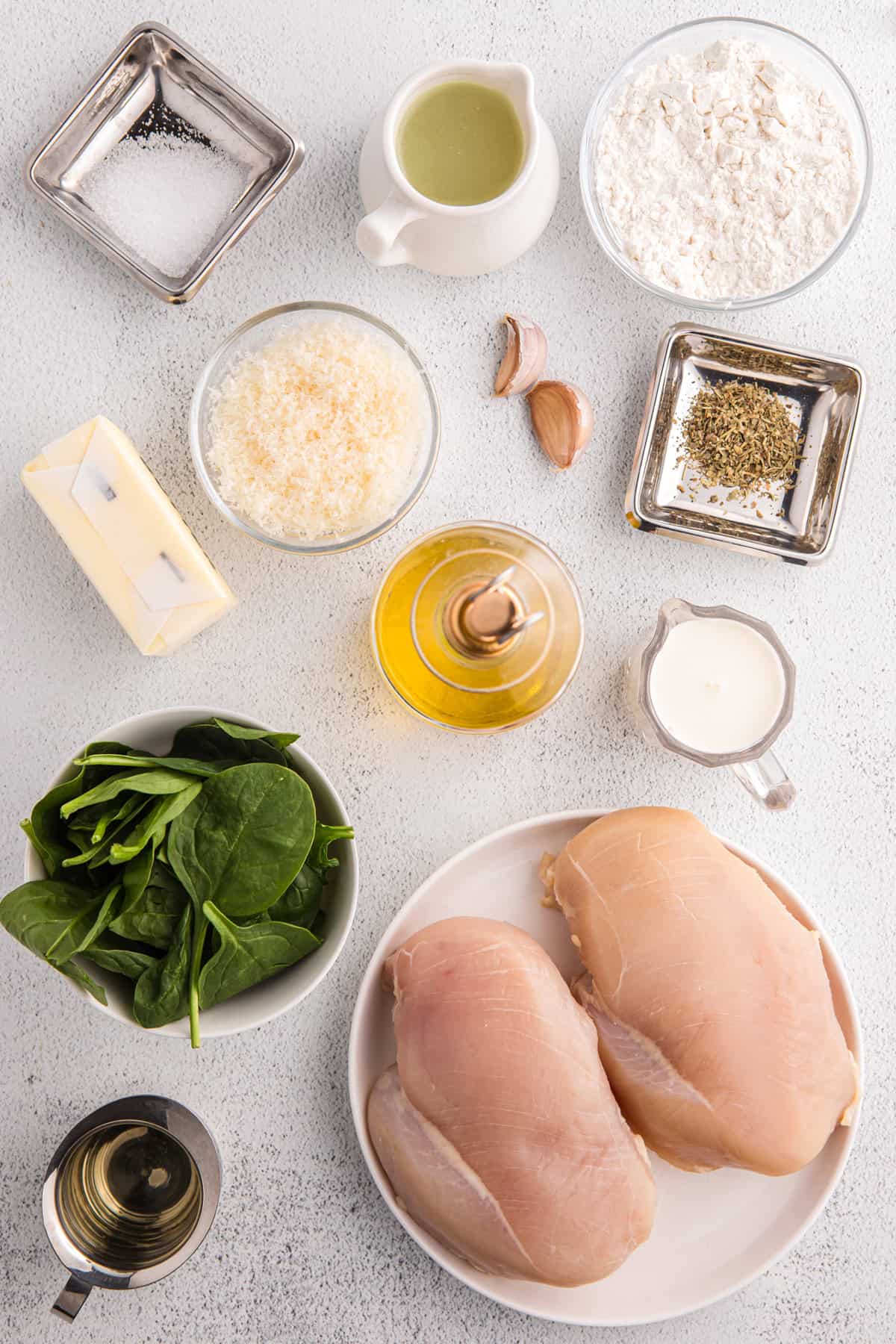
Here’s an overview of everything needed to make this chicken recipe. The exact measurements can be found in the recipe card at the end of the post.
- Chicken – Halve the chicken breasts lengthwise into cutlets so they stay thin and tender.
- All-purpose flour – Used to lightly coat the chicken.
- Parmesan cheese – Use freshly grated cheese if at all possible.
- Olive oil & butter – I use both for frying the chicken. The butter also creates a rich base to start the sauce.
- Garlic – Freshly minced garlic is key.
- Dry white wine – A Sauvignon Blanc or Pinot Grigio works best. If you prefer not to cook with alcohol, substitute with an equal amount of chicken broth and a squeeze of fresh lemon juice to provide some acidity.
- Chicken broth – I use some chicken broth in the sauce to balance the acidity of the white wine.
- Herbs de Provence – If you don’t have this blend, dried thyme or oregano are excellent stand-alone substitutes. Italian seasoning can also be used.
- Heavy cream – For a slightly lighter version, you can use half-and-half, though the sauce will be thinner. To keep it thick, you may need a small cornstarch slurry.
- Baby spinach – Regular spinach also works, though it doesn’t wilt as quickly. You can use chopped kale, but it will need to simmer in the sauce for 3-4 extra minutes to soften properly.
How To Make Chicken Florentine
One of the great things about this dish is that even though it looks fancy, it comes together in just over 30 minutes. The printable instructions can be found in the recipe card at the end of the post.
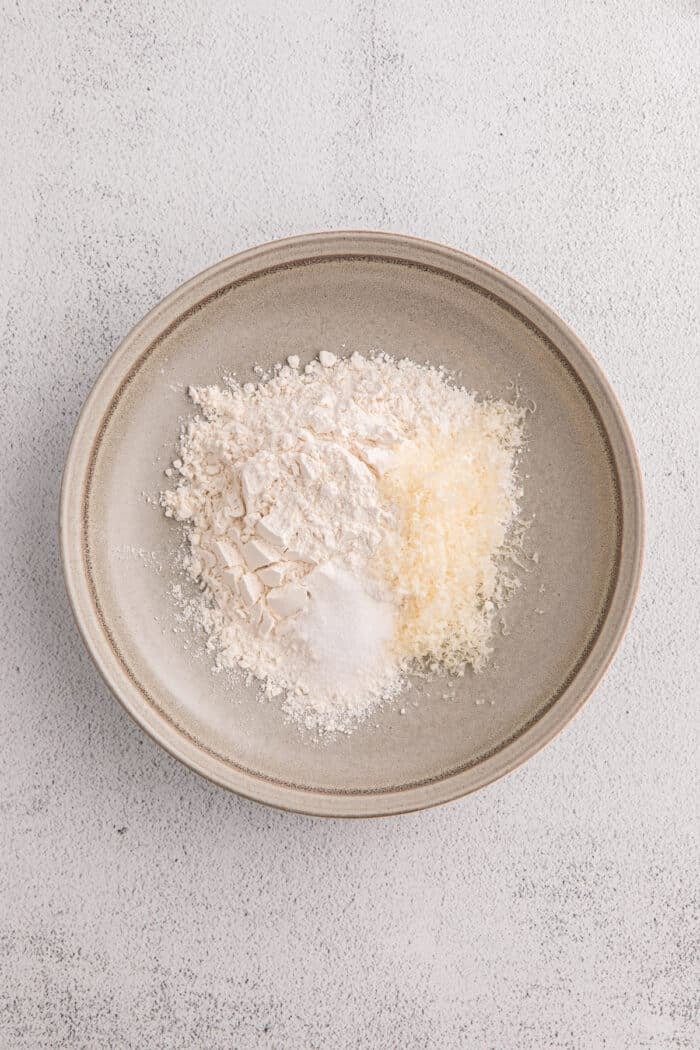
- Dredge the chicken. Combine the flour, parmesan, and salt in a bowl. Coat the chicken in the mixture, shaking off any excess so the coating is light and even.
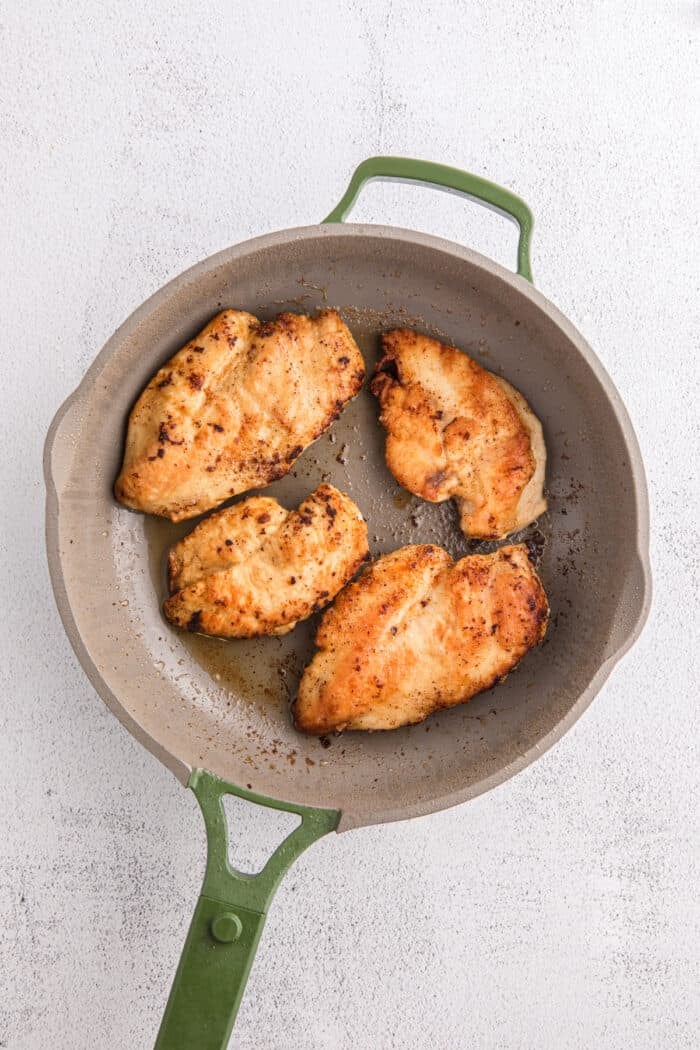
- Cook the chicken. Heat the oil and 2 tablespoons of butter over medium-high heat. Cook the chickens for 4-5 minutes per side, until the outside is golden brown and it reaches an internal temperature of 165F. Transfer to a plate.
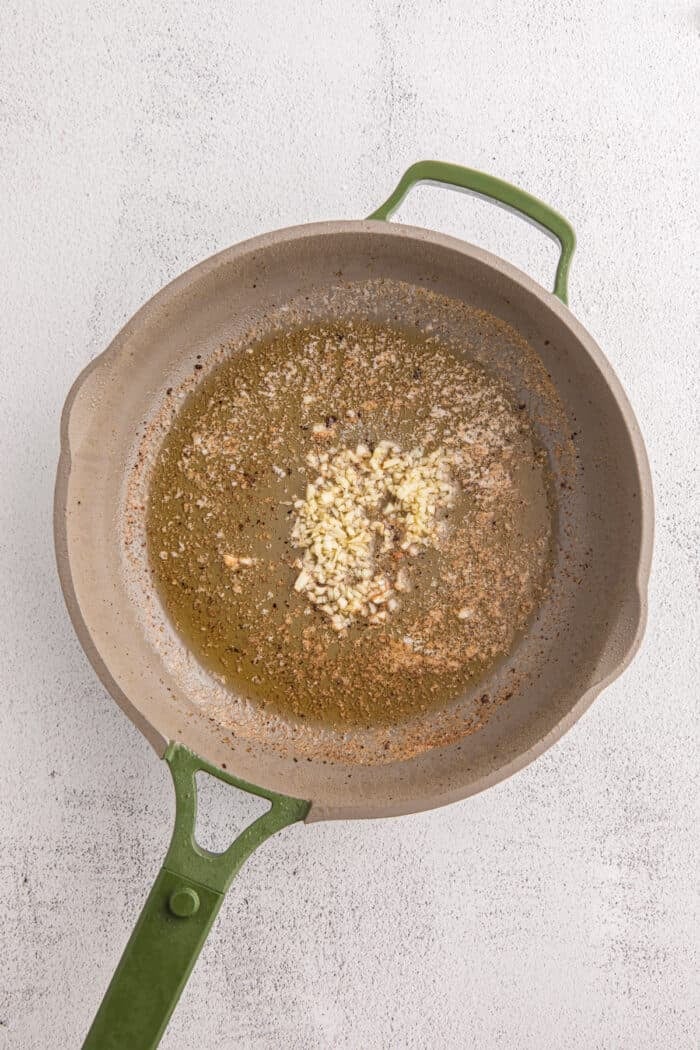
- Cook the aromatics. Reduce the heat to medium, add the remaining butter, and cook the garlic for about a minute.
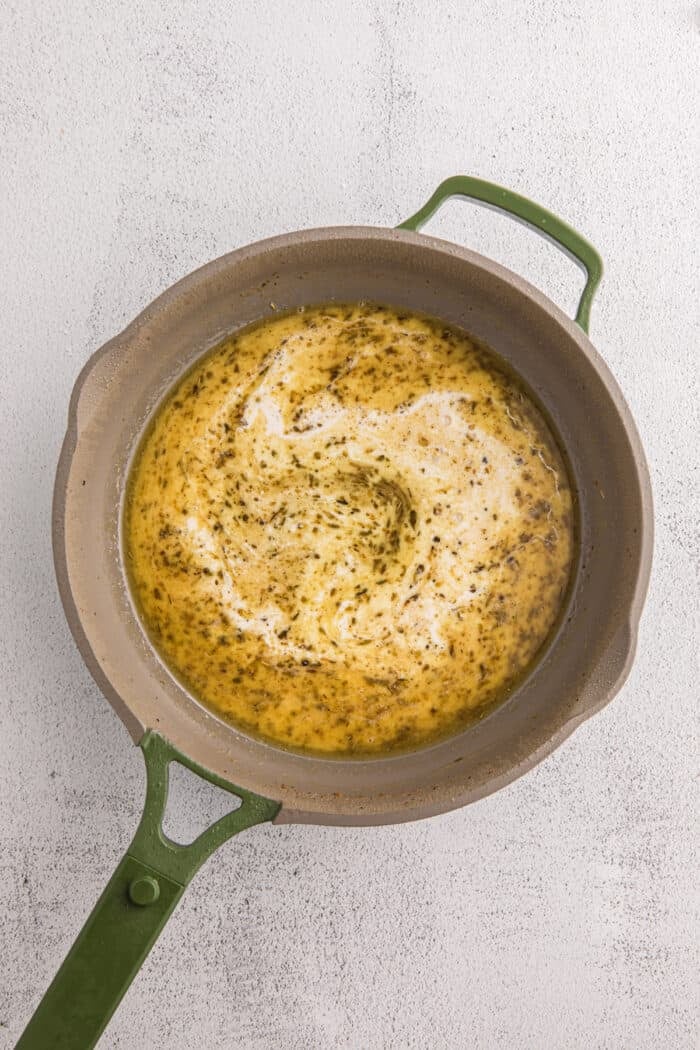
- Make the sauce. Add the wine to the pan and use a spatula to scrape any browned bits off the bottom. Stir in the broth and herbs, then let the liquid reduce by about 1/3. Stir in the heavy cream. Simmer for 2-3 minutes.
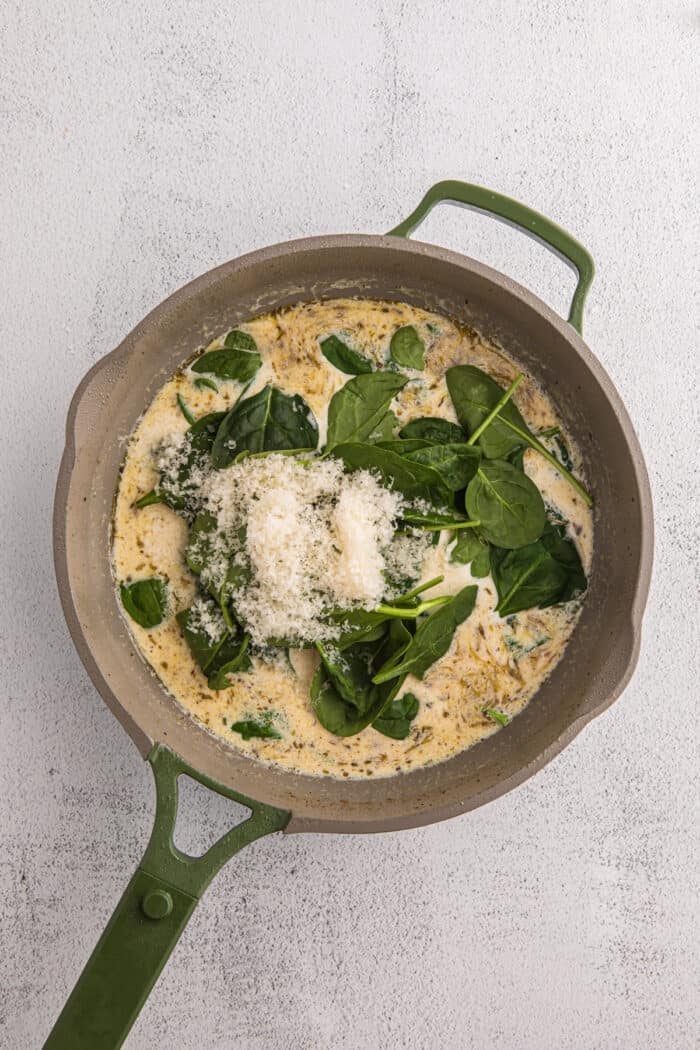
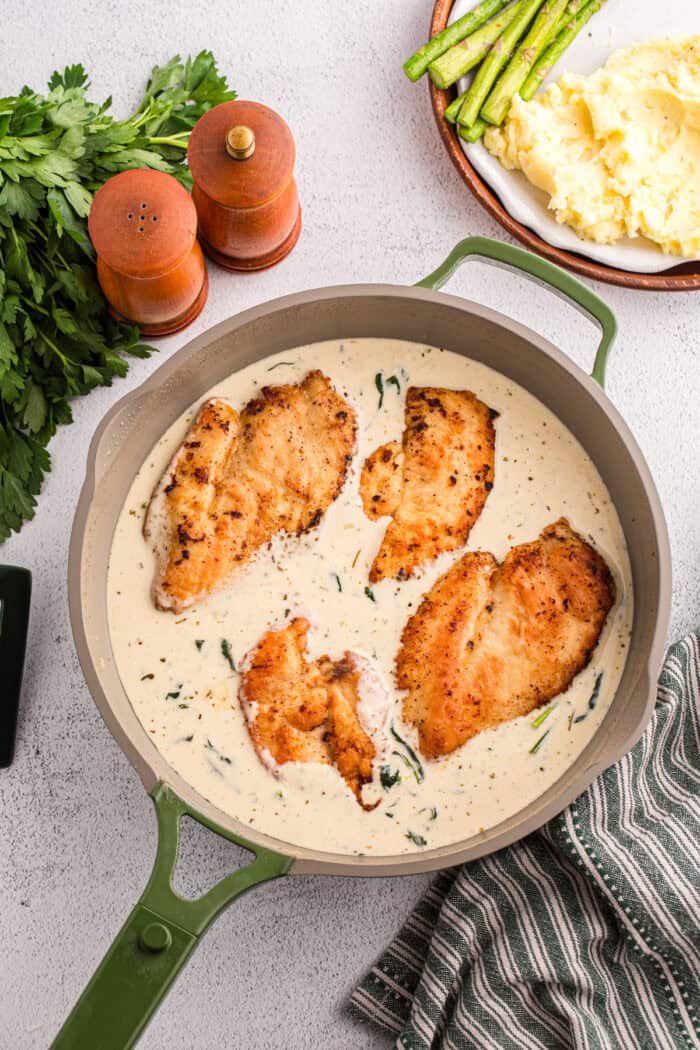
- Add the spinach. Stir in the spinach and parmesan until the spinach has melted. Add salt and pepper to taste.
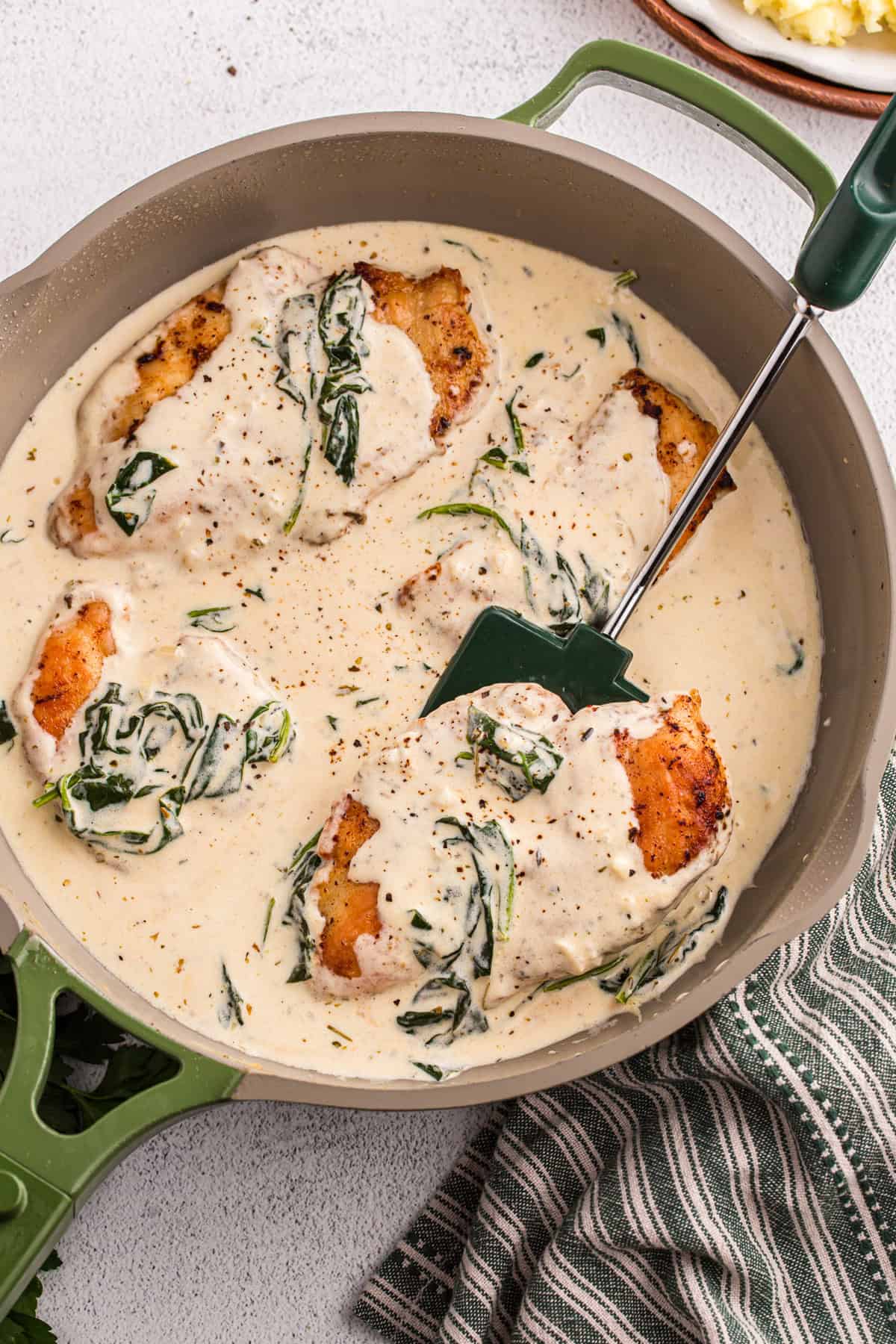
- Add the chicken. Return the chicken to the skillet, spooning the sauce over it. Heat for a minute then serve and enjoy.
Recipe Tips & Tricks
Here are a few important tips for perfecting this chicken Florentine recipe each and every time.
- Lightly dredge the chicken. If the flour coating is too thick, it will fall off in the pan and burn, or it will make the sauce gummy. A thin, translucent layer of flour is all you need to achieve a golden sear and a perfect sauce consistency.
- Use freshly grated parmesan. Grating the parmesan cheese yourself rather than using the pre-shredded cheese, especially the type in the bottle, really makes a difference. Pre-shredded cheeses are coated in potato starch or cellulose to prevent clumping, which can result in a grainy sauce
- Make sure the cutlets are of uniform thickness. If one side is significantly thicker than the other, use a meat mallet to pound them to an even ½-inch thickness. This ensures the entire piece of chicken finishes cooking at the same time without the edges drying out.
- Deglaze the pan with wine. Those “browned bits” left behind after frying the chicken are concentrated flavor. The acidity of the wine releases them so they can be incorporated into the sauce, giving it a complex flavor.
- Add the spinach at the very end. Spinach wilts quickly, and overcooking it will cause it to turn a dull, brownish-green. Stirring it in just until it collapses preserves its bright color and delicate texture.
Ways To Serve It
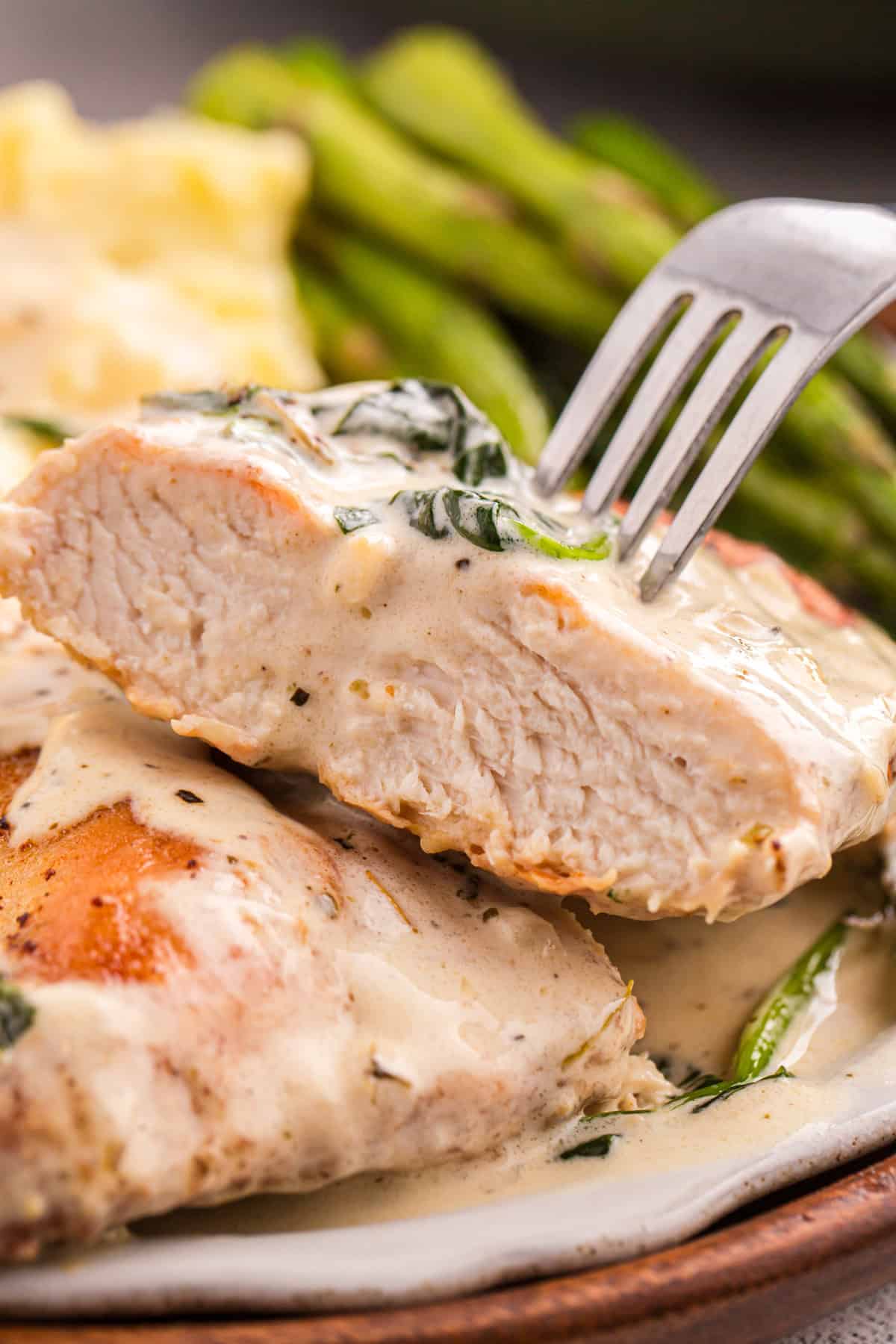
Chicken Florentine is typically served with pasta, rice, or mashed potatoes. It’s ideal to have something to soak up every bit of the sauce because it’s so good!
I also like to add some green veggies on the side, whether it’s oven roasted asparagus, a caesar salad, or an Olive Garden salad.
Storage & Reheating
- Fridge: Store leftover chicken Florentine in an airtight container in the refrigerator for up to 3 days.
- Reheat: When reheating, do so gently in a skillet over medium-low heat with a splash of milk or broth to loosen the cream sauce. Avoid the microwave if possible, as it can cause the sauce to separate and the chicken to become rubbery.
 Add as Google Trusted Source
Chicken Florentine
Ingredients
- 2 large chicken breasts, halved lengthwise (cutlets)
- ¾ cup all-purpose flour
- ¾ cup parmesan cheese, freshly grated, divided
- 1 teaspoon salt
- 2 tablespoons olive oil
- 4 tablespoons salted butter, divided in half
- 2 cloves garlic, minced
- ½ cup dry white wine, or chicken broth
- ½ cup chicken broth
- ½ teaspoon herbs de provence , or Italian seasoning
- ¾ cup heavy cream
- 2 cups fresh baby spinach
- Salt and pepper, to taste
Instructions
- In a shallow bowl, add in the flour, ¼ cup parmesan cheese, and 1 teaspoon salt, shaking off any excess.
- Dredge the chicken cutlets in the mixture, shaking off any excess to ensure the coating is light and even.
- Heat the olive oil and 2 tablespoons of salted butter in a large skillet over medium-high heat.
- Cook the chicken for 4 to 5 minutes per side until golden brown and cooked through. Remove and set aside on a plate.
- Reduce the heat to medium and add the remaining 2 tablespoons butter and garlic to the skillet, cooking for 1 minute or until the garlic becomes fragrant.
- Pour in the wine to deglaze the pan, scraping up any browned bits.
- Stir in the chicken broth and herbs de provence. Let the liquid reduce by about one-third to concentrate the flavor.
- Pour in the heavy cream and herbs de provence and bring to a gentle simmer for 2 to 3 minutes until slightly thickened.
- Add the spinach and Parmesan cheese, stirring until the spinach is wilted.
- Taste and add salt and pepper according to preference.
- Return the chicken to the skillet, spooning the sauce over the meat, and heat through for 1 minute before serving.
Notes
Nutrition
Nutrition information is automatically calculated, so should only be used as an approximation.
Like this? Leave a comment below!
Leave a comment & rating below, or tag @kitchenfunwithmy3sons on social media!