


These Sourdough English Muffins are soft, chewy, and full of the classic nooks and crannies everyone loves. Cooked on the stovetop and finished in the oven, they’re perfect for breakfast sandwiches, toasted with butter and jam, or simply enjoyed fresh from the toaster.

Yes, I’m still on a roll with making everything sourdough! My sourdough starter has been around for months now, which means lots of sourdough bread and sourdough rolls, but also lots of sourdough discard. These sourdough English muffins are one of my favorite ways to use discard, right there with sourdough sandwich bread and sourdough brownies.
Not only do these sourdough English muffins have the perfect texture, they’re also simple to make. One of my favorite things about this recipe is that there’s no rolling pin or biscuit cutter required. Simply divide the dough, shape each piece into a ball, and press it directly into the cornmeal coating. This gentle shaping method keeps the dough from being overworked and means there are no leftover scraps to reroll. So easy!
Why These Sourdough English Muffins Are So Good
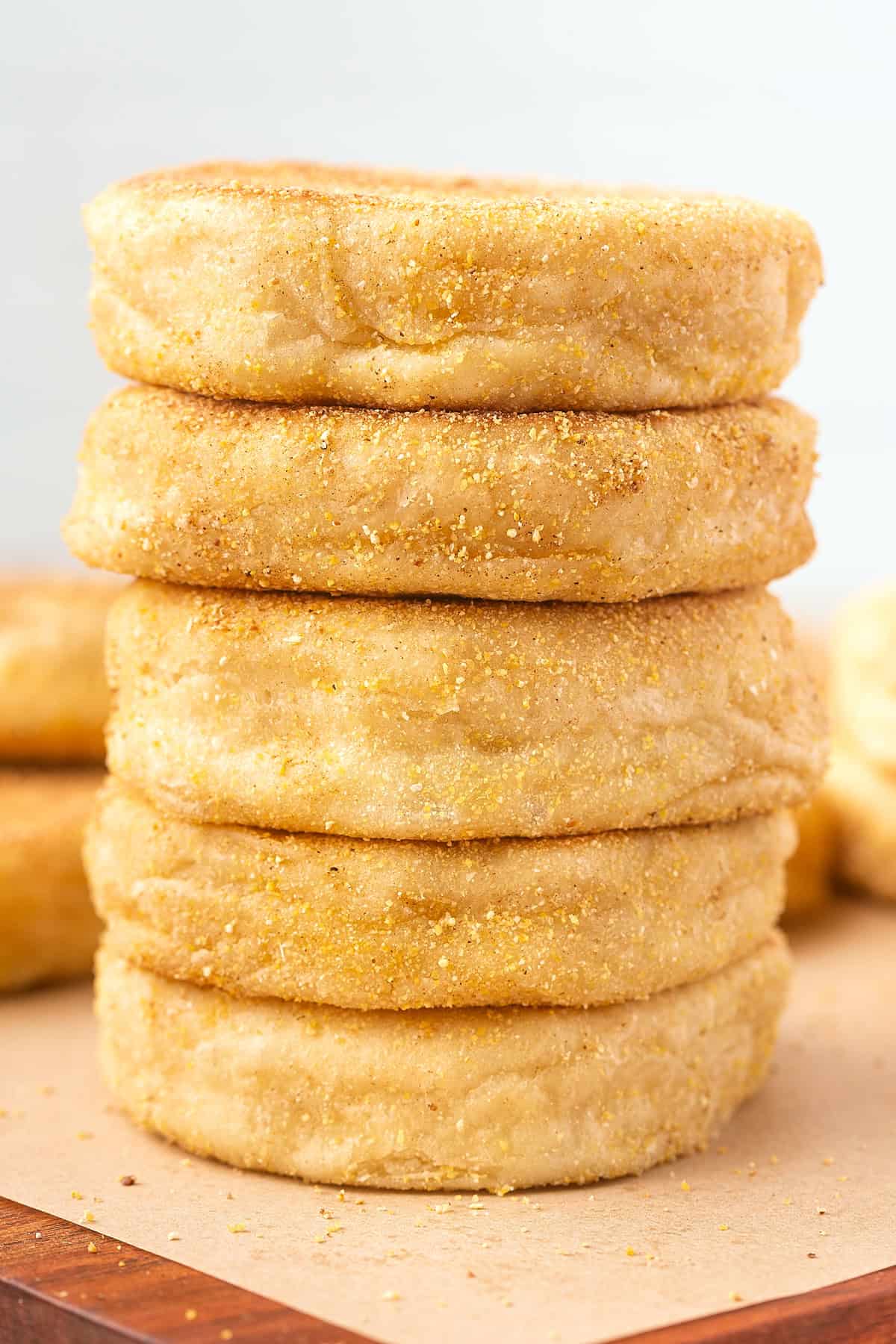
- Perfect texture. This dough is intentionally a little firmer than cinnamon roll or dinner roll dough. That extra structure helps the English muffins hold their shape while still creating a soft interior with plenty of nooks and crannies.
- Lightly tangy flavor. These English muffins offer that tangy sourdough flavor, though it’s a bit milder than in, say, sourdough bread. I love that undertone of flavor it adds to breakfast sandwiches and it works nicely with sweet jams.
- Versatile. There are a million ways to enjoy these sourdough English muffins, many of which I mention below. They’re so good with butter and jam, but also make an epic breakfast sandwich. They store really well, too, so they’re great to have on hand for busy mornings.
Ingredient Notes
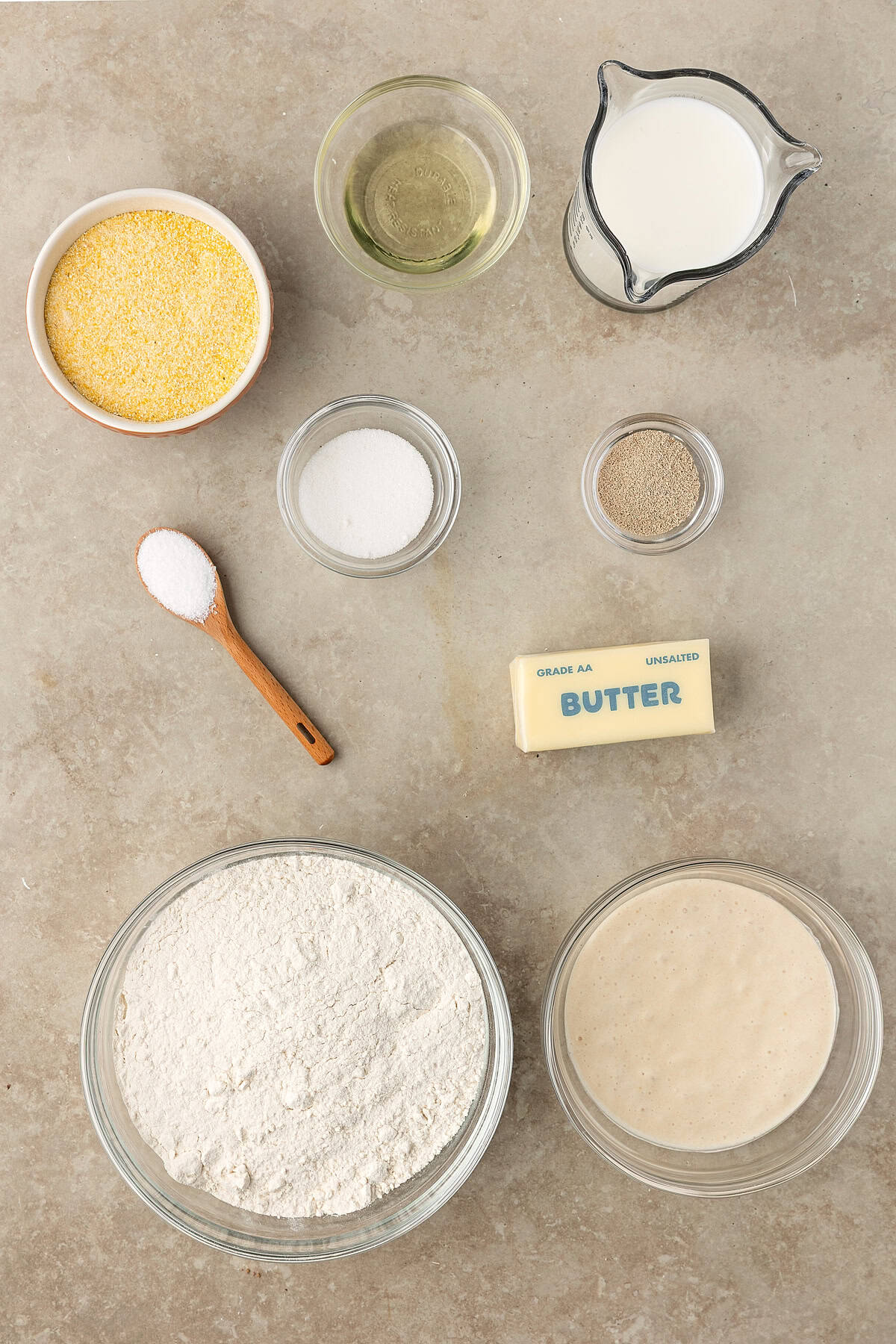
Here’s an overview of everything needed to make these sourdough discard English muffins. Be sure to check out the recipe card below for the exact measurements.
- Whole milk – Warm to 105-110F so that it activates the yeast.
- Sourdough discard – The sourdough starter you’re about to toss before feeding it again.
- Yeast – I like to use instant yeast for ease. However, active dry yeast works too. Simply let it proof in the warm milk with the sugar for 5–10 minutes before continuing with the recipe.
- Granulated sugar – Feeds the yeast.
- Butter – Adds richness to the dough. I use unsalted to avoid making it too salty.
- Bread flour – I prefer bread flour in this recipe as it has a lighter texture to keep the muffins soft.
- Salt – The amount I use depends on the brand. I like Diamond Crystal kosher salt and add 1 ½ teaspoons. Morton kosher salt tends to be a bit..well, saltier..so I use slightly less.
- Fine yellow cornmeal – I like using a combination of ¾ cup fine yellow cornmeal and ¼ cup semolina flour for a finer, bakery-style coating. If you don’t have semolina, don’t worry! Using all cornmeal works beautifully too. Use what you have.
- Butter & oil – I like to use both to coat the skillet. The butter adds wonderful flavor while the small amount of oil helps prevent it from browning too quickly. You only need enough to lightly coat the skillet. You aren’t frying the English muffins!
How To Make Sourdough English Muffins
This recipe takes a bit of time but luckily, most of that time is inactive proof time. And if you have a stand mixer, it does most of the work! The printable instructions are in the recipe card below.
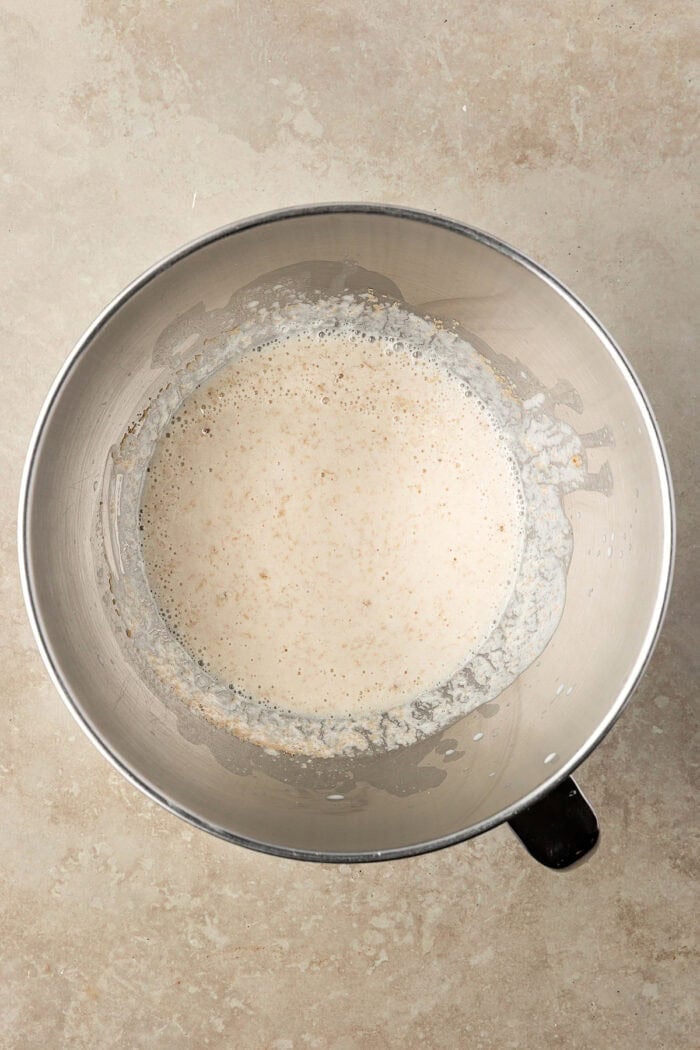
- Make the yeast mixture. Combine the warm milk, sourdough discard, yeast, and sugar in the bowl of a stand mixer with a dough hook.
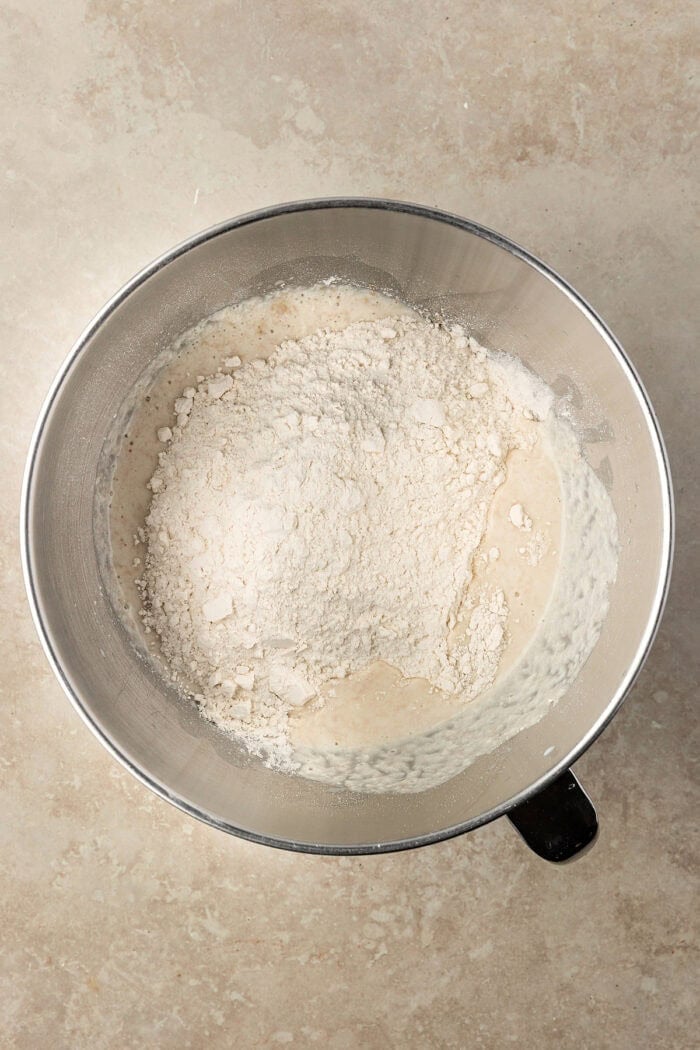
- Add the flour. Mix the bread flour in on low speed until it forms a shaggy dough.
- Add the other ingredients. Keep the mixer on low as you add the softened butter in 2-3 additions. Let each one incorporate before adding more. Add the salt.
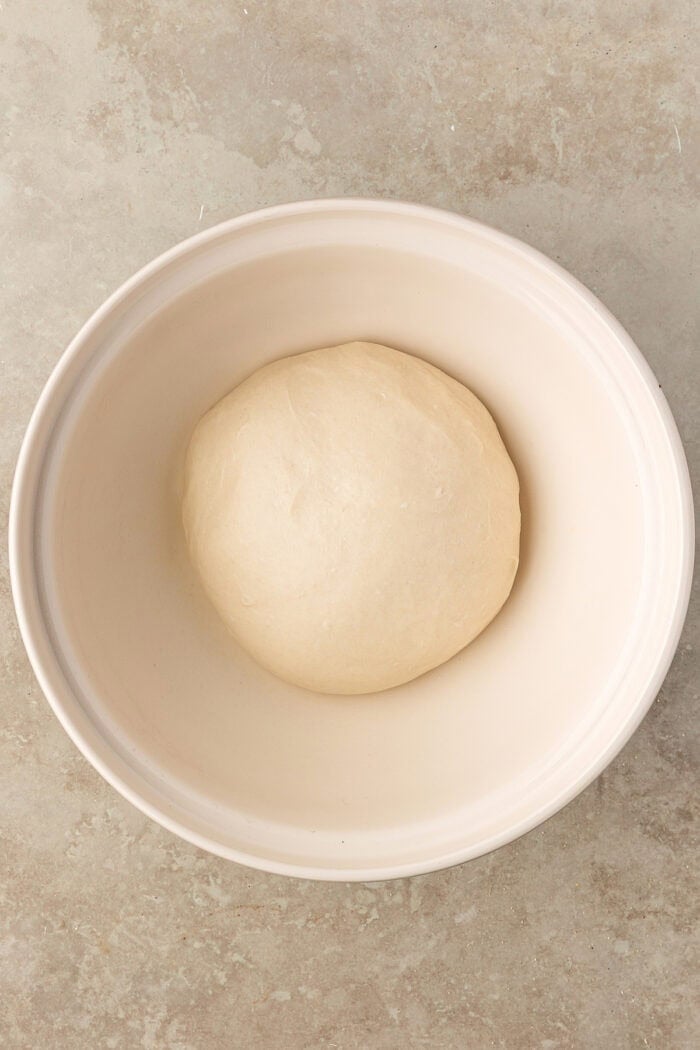
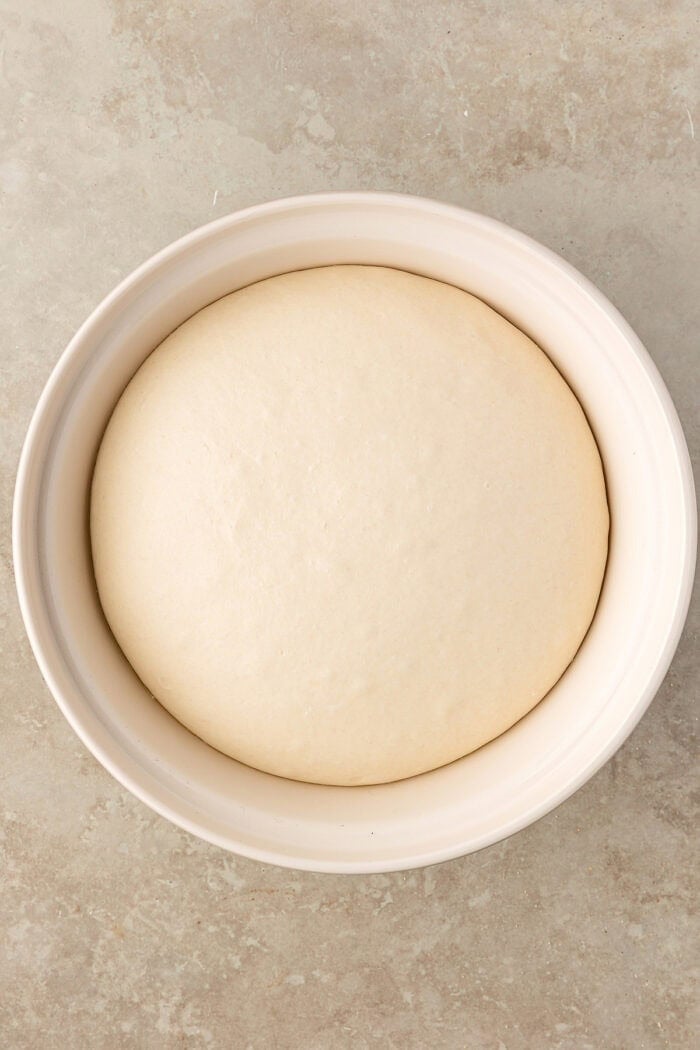
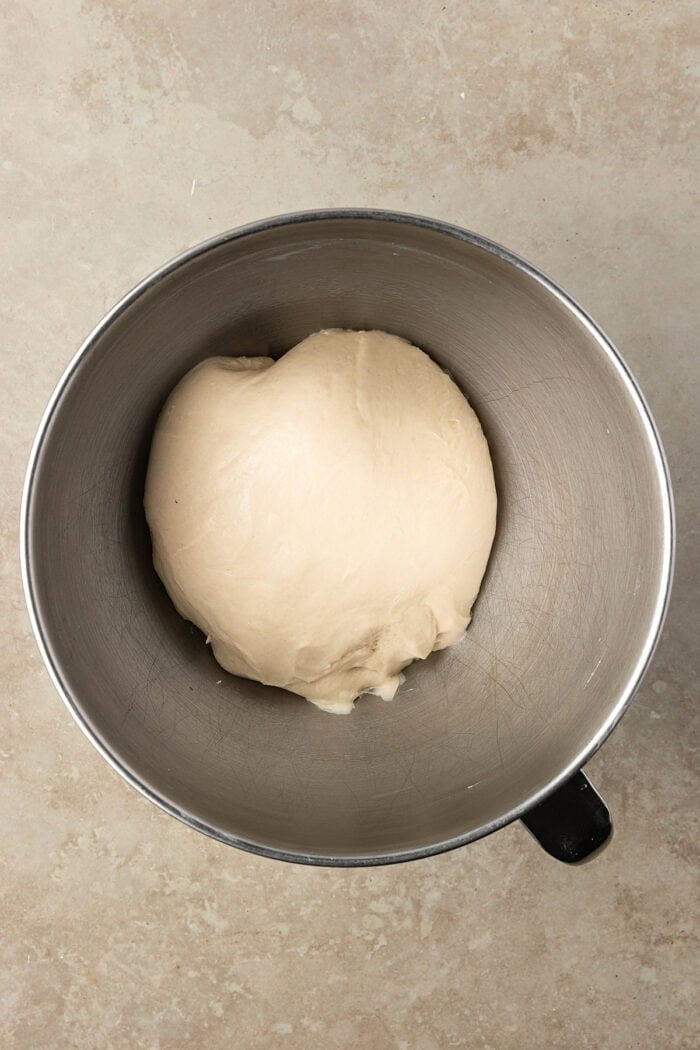
- Knead. Increase the mixer speed to medium-low. Knead for 6-8 minutes, until the dough lightly slaps against the mixture while being slightly tacky.
- Let rise. Transfer the dough to a lightly greased bowl. Cover and let it sit for 60-90 minutes, until it doubles in size.
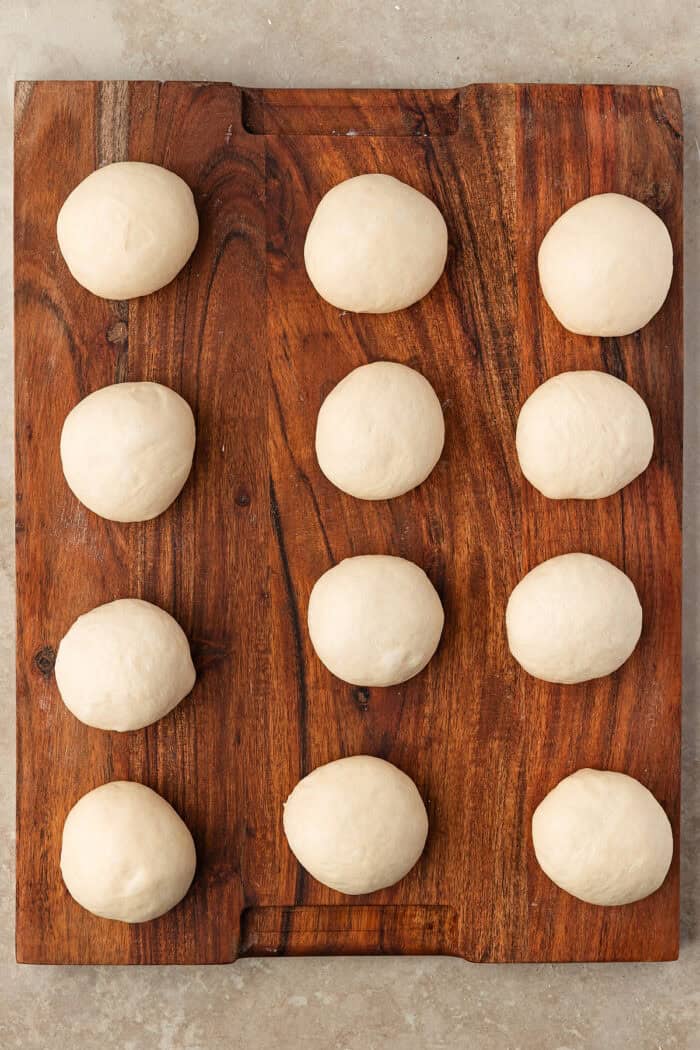
- Divide the dough. Turn the dough onto an unfloured surface. Weigh the entire dough, then divide it into 12 equal pieces. Shape each one into a smooth, tight ball.
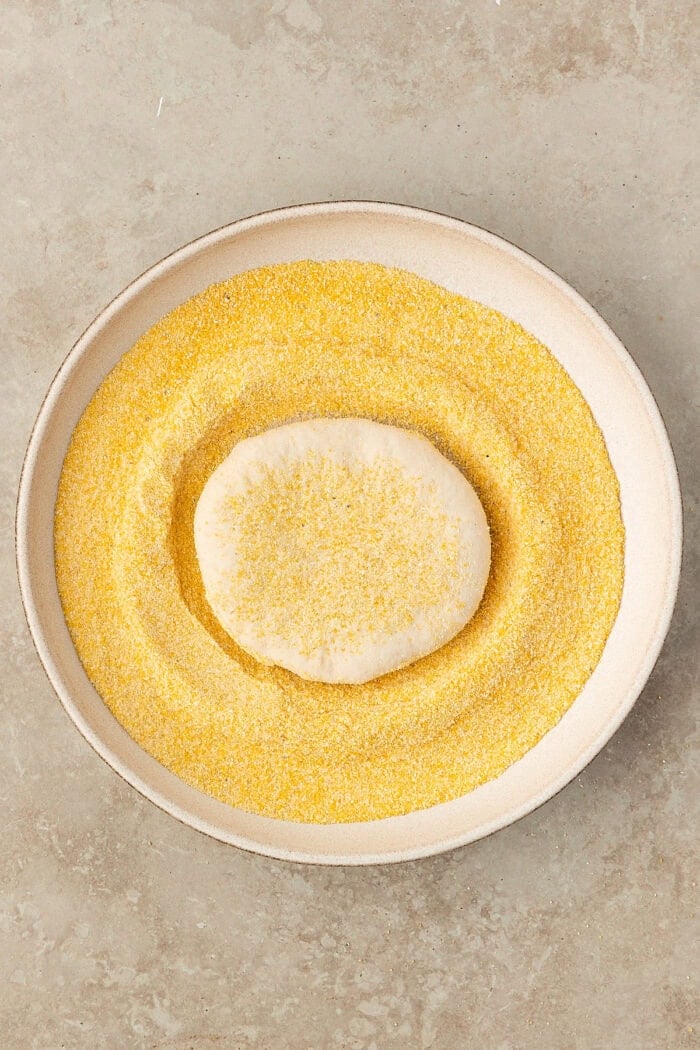
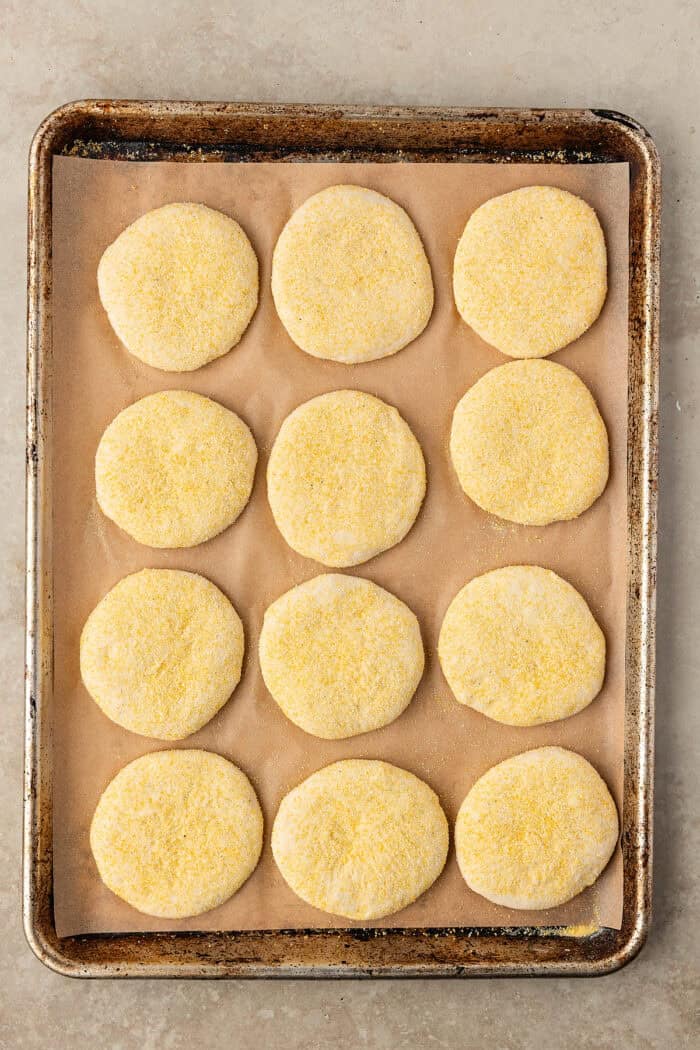
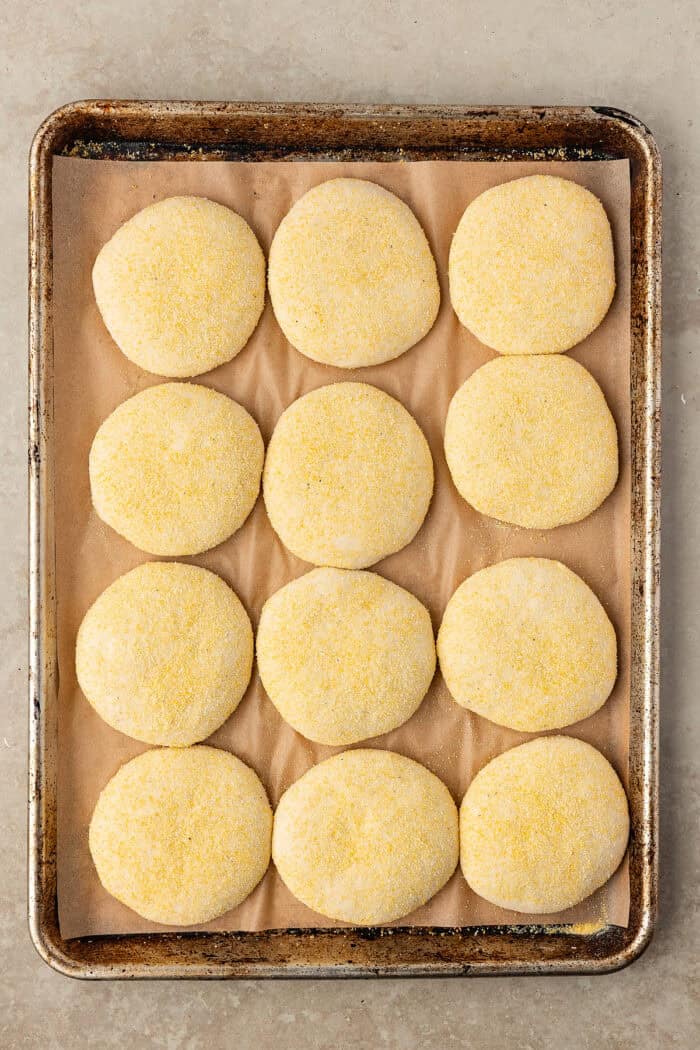
- Coat in cornmeal. Place one dough ball in a time in the cornmeal. Gently press down until it’s about 3 inches across. Flip and coat the other side. Place on the baking sheet. Repeat with all dough balls.
- Let rise again. Cover the baking sheet with greased plastic wrap or a kitchen towel. Let rise for 45-75 minutes, until they’re noticeably puffy and no longer cool to the touch.
- Prep to cook. Preheat the oven to 350F. Place a wire rack on a rimmed baking sheet. Heat the skillet to medium to medium-low heat. Coat with butter and a drizzle of oil.
- Cook. Cook 3-4 English muffins until the bottoms are lightly golden, about 3-5 minutes. Flip and cook until the second side is lightly golden. Transfer directly to the oven. Bake for 5-8 minutes. Repeat with the rest of the dough.
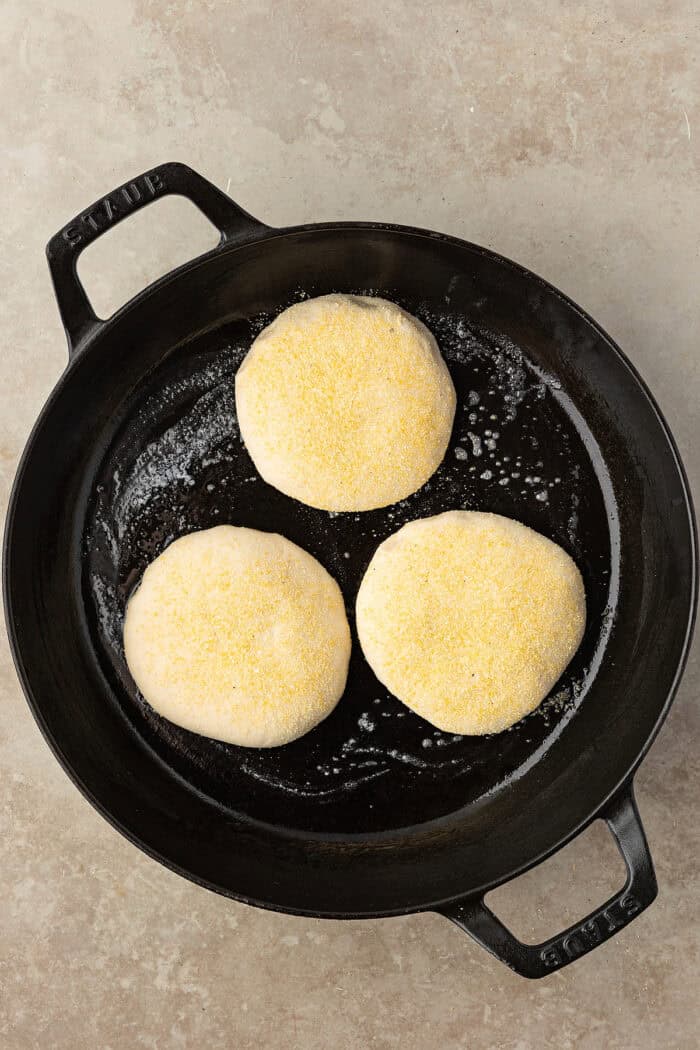
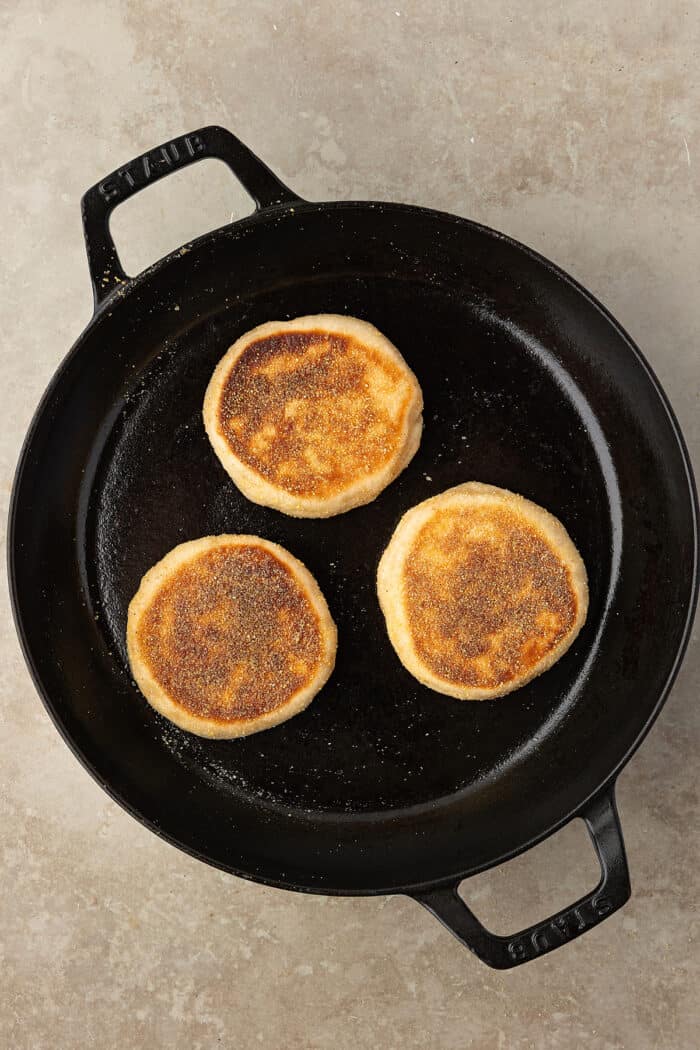
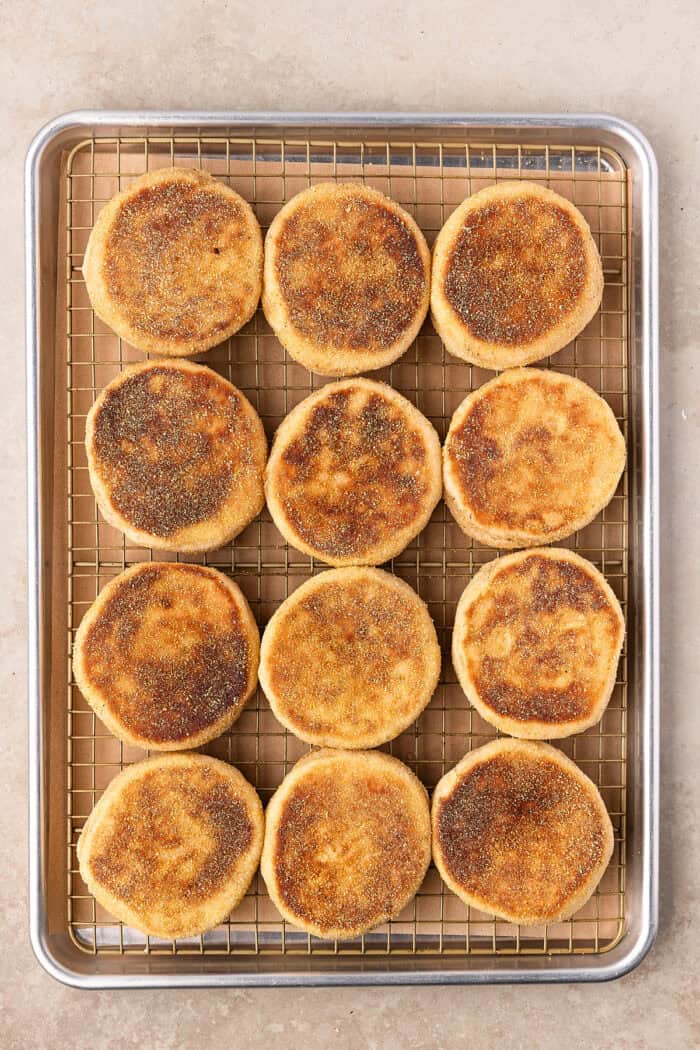
- Cool. Transfer the English muffins to a cooling rack. Wait until they’re completely cool and then split with a fork.

Why Finish The English Muffins In The Oven?
Finishing these sourdough English muffins in the oven helps ensure the centers bake through evenly without over-browning the outsides on the stovetop.
During testing, I found that transferring each batch directly to the oven as soon as it came off the skillet produced the most consistent results. This keeps the first batch from cooling while the remaining muffins finish cooking on the stovetop.
Make The Dough The Night Before
If you’d like to split this recipe over two days, you can do that!
After mixing the dough, cover the bowl and refrigerate overnight. The next day, if the dough has nearly doubled, divide and shape it while it’s still cool. If it hasn’t risen much, let it sit at room temperature for 30–45 minutes before dividing and continuing with the recipe.
What If I Don’t Have a Stand Mixer?
I’ll be honest, here. Having a stand mixer with a dough hook makes this recipe SO much easier. But, you can absolutely make it without one!
Simply combine the warm milk, sourdough discard, yeast, and sugar in a large mixing bowl. Stir in the flour until a shaggy dough forms, then knead on a lightly floured surface for 3–4 minutes.
Flatten the dough slightly and work in the softened butter a little at a time, sprinkling the salt over the dough as you incorporate the butter. The dough will become sticky at first, but keep kneading. It will come back together. Continue kneading for another 8–10 minutes, or until the dough is smooth, elastic, and slightly tacky. Then continue with the recipe as written.
Tips & Tricks
Before you get baking, read through these tips for perfecting this sourdough discard English muffins recipe.
- Weigh the dough. I recommend weighing the entire dough before dividing it. During testing, each English muffin typically weighed between 74–76 grams, but every batch is a little different. Simply divide your total dough weight by 12 for evenly sized English muffins that bake consistently.
- Easily shape the muffins. Using a shallow plate or shallow pasta bowl for the cornmeal makes shaping much easier. Simply place the dough ball onto the cornmeal and gently press it down until it measures about 3–3½ inches across, then flip and coat the second side. There’s no need to roll out the dough or use a biscuit cutter, which means no scraps to reroll and less handling of the dough.
- Rotate the skillet. Cast iron skillets often develop hot spots, so don’t hesitate to rotate the muffins during cooking for more even browning.
- Add more butter if needed. If the skillet begins to dry out between batches, add another small amount of butter and oil. If the cornmeal begins to darken too much, carefully wipe the skillet clean with a paper towel before continuing.
- Don’t rely on time alone. Every skillet, stovetop, and oven cooks a little differently. Cook until the muffins are lightly golden on each side, then finish baking until the centers reach 200–205°F.
- Use a large griddle. If you have a large electric griddle or a Blackstone, you can cook many more English muffins at once before transferring them to the oven. This can significantly speed up the cooking process when making a full batch.
- Cool before splitting. For the best nooks and crannies, allow the English muffins to cool completely before splitting them with a fork instead of slicing them with a knife.
Ways To Enjoy Them
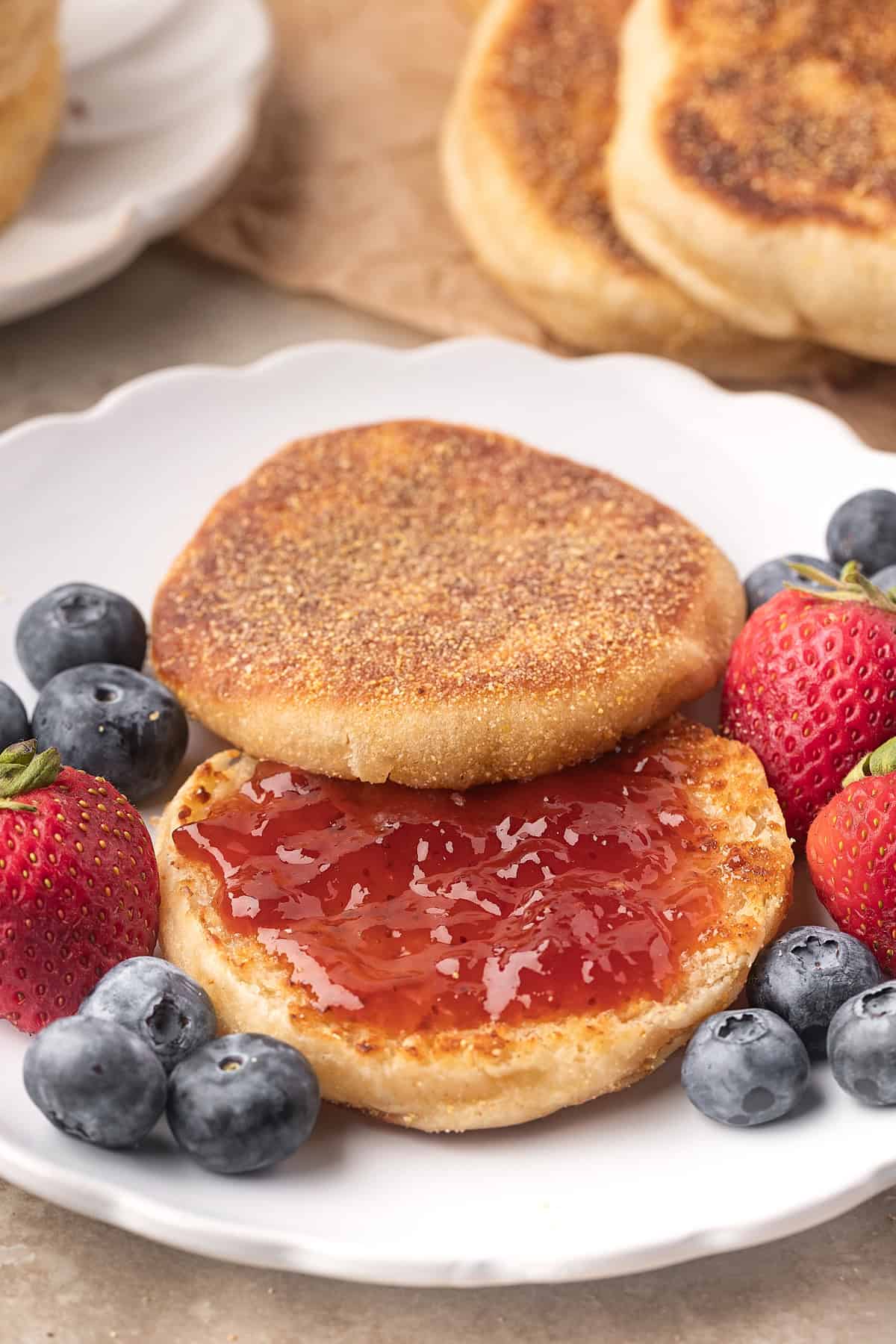
These sourdough English muffins are so flavorful that one of my favorite ways to enjoy them is simply toasted with butter. Cinnamon honey butter is also super yummy on them. We also enjoy them topped with sweet jam. Strawberry jam, peach jam, and Christmas jam are our favorites.
English muffins are also great for breakfast sandwiches. I’ll often make a double batch and then prepare make ahead breakfast sandwiches for the freezer. You can also use one instead of a bagel as a twist on this steak egg and cheese bagel recipe. And, of course, don’t forget about eggs benedict!
For a non-breakfast option, the boys love to make English muffin pizzas. Just top them with pizza sauce and shredded cheese, and pop them in the toaster oven or air fryer for a few minutes.
Proper Storage
- Room temperature: Leftover sourdough English muffins can be stored in an airtight container at room temperature for up to 3 days.
- Fridge: For slightly longer storage, keep them in the fridge for up to a week.
- Freezer: These also freeze very well! Cool them completely, then store in a freezer-safe bag for up to 3 months. Toast directly from frozen or thaw overnight before serving.

Sourdough English Muffins
Ingredients
- 1 cup plus 1 tablespoon whole milk , warmed to 105–110°F
- ⅔ cup sourdough discard
- 2¼ teaspoons instant yeast (or active dry yeast),
- 1½ tablespoons granulated sugar
- 2 tablespoons unsalted butter , softened
- 3½ cups bread flour
- 1½ teaspoons kosher salt or 1¼ teaspoons Morton kosher salt
- ¾ cup fine yellow cornmeal
For the skillet
- Unsalted butter as needed
- Neutral oil as needed
Instructions
- In the bowl of a stand mixer fitted with the dough hook, combine the warm milk, sourdough discard, yeast, and sugar. If using active dry yeast, let the mixture stand for 5–10 minutes until foamy. (Instant yeast can be mixed in immediately.)
- Add the bread flour and mix on low speed until a shaggy dough forms.
- With the mixer running on low, add the softened butter in 2–3 additions, allowing each addition to fully incorporate before adding more. Add the salt while incorporating the butter. Don’t worry if the dough loosens and looks a little messy after adding the butter—that’s completely normal. Keep the mixer running, and within a few minutes, the dough will come back together into a smooth, elastic ball.
- Increase the mixer to medium-low speed and knead for 6–8 minutes. The dough should feel soft but a little firmer than cinnamon roll or dinner roll dough. It should clean the sides of the bowl and lightly slap against the mixer while still feeling slightly tacky to the touch. Resist the urge to add extra flour unless the dough is very sticky.
- Transfer the dough to a lightly greased bowl, cover, and let it rise until doubled in size, about 60–90 minutes.
- Turn the dough onto an unfloured work surface. I like to weigh the entire dough before dividing it into 12 equal pieces. During testing, each English muffin typically weighed between 74–76 grams, but every batch is a little different, so simply divide your total dough weight by 12.
- Shape each piece into a smooth, tight ball.
- Place the cornmeal in a shallow plate or shallow pasta bowl. Place one dough ball onto the cornmeal and gently press it down until it’s about 3–3½ inches across. Flip it over and coat the other side before transferring it to a parchment-lined baking sheet. This method coats and shapes the English muffins at the same time, so there’s no need to roll out the dough or use a biscuit cutter. Repeat with the remaining dough.
- Cover loosely with a lid, lightly greased plastic wrap, or a clean kitchen towel. Let the English muffins rise until they’re noticeably puffy and no longer feel cool to the touch, about 45–75 minutes depending on your kitchen.
- Preheat the oven to 350°F and place a wire rack inside a rimmed baking sheet.
- Heat a large cast iron skillet or heavy-bottomed skillet over medium to medium-low heat. Lightly coat the skillet with a small amount of butter and a drizzle of neutral oil.
- Cook 3–4 English muffins at a time until the bottoms are lightly golden, about 3–5 minutes. If your skillet develops hot spots, rotate the muffins halfway through cooking for more even browning. Flip and cook the second side until lightly golden, but don’t worry about developing a deep crust since they’ll finish baking in the oven.
- As soon as one batch comes off the skillet, transfer the muffins directly to the prepared wire rack and place them in the oven while you continue cooking the next batch. Baking each batch immediately keeps the muffins at a similar starting temperature and helps them finish more evenly. Bake for 5–8 minutes, or until the centers reach 200–205°F.
- Repeat with the remaining batches, adding a little more butter and oil to the skillet as needed.
- Transfer the English muffins to a cooling rack and allow them to cool completely. For the best nooks and crannies, split them with a fork rather than slicing them with a knife.
Last Step:
Please leave a rating and comment letting us know how you liked this recipe! This helps our business to thrive and continue providing free, high-quality recipes for you.Notes
Nutrition


Leave a Review!
We LOVE hearing from you! Submit your question or comment here.
Your email address will not be published.